Daily Life in Cameroon Explained – Cost, Housing, Transport & Reality
Daily life in Cameroon explained properly requires looking beyond tourist impressions and headlines. Daily life in Cameroon explained means understanding how ordinary people live, work, commute, shop, raise families, and navigate infrastructure in both urban and rural settings.
Cameroon is not experienced in one uniform way. Daily living varies depending on location, income level, profession, and regional culture. This guide provides a realistic overview of what everyday life looks like.
Key Components of Daily Life in Cameroon
• → Cost of Living in Cameroon Explained
• → Housing in Cameroon Explained
• → Transport in Cameroon Explained
• → Infrastructure and Utilities in Cameroon Explained
Understanding Daily Life in Cameroon Explained
When discussing daily life in Cameroon explained, we must consider several core elements:
- Cost of living
- Housing conditions
- Transport systems
- Electricity and water access
- Work routines
- Social expectations
These factors combine to shape the lived experience of residents and returnees.
Urban and rural areas differ significantly, but certain patterns remain consistent across regions.
For broader cultural context:
→ Cameroon Culture and Society
Cost of Living and Economic Rhythm
The cost of living varies widely between cities and smaller towns.
Major urban centres such as Douala and Yaoundé typically have:
- Higher rental prices
- Greater access to imported goods
- Wider service availability
Smaller towns may offer:
- Lower rent
- Fewer luxury goods
- Reduced service variety
Expenses often include:
- Food
- Transport
- School fees
- Utility costs
- Healthcare
Income levels vary greatly, and many households combine multiple income sources.
For business and economic structure:
→ Business & Survival Guide
Housing and Living Conditions
Housing types vary depending on income and region.
Common housing realities include:
- Apartment blocks in urban centres
- Standalone houses in residential areas
- Compound-style family homes in smaller towns
Access to utilities may vary by neighbourhood.
Some areas experience:
- Periodic electricity outages
- Water supply interruptions
- Internet reliability variation
Many households adapt with generators, water storage systems, or alternative connectivity solutions.
Housing expectations should align with realistic infrastructure conditions.
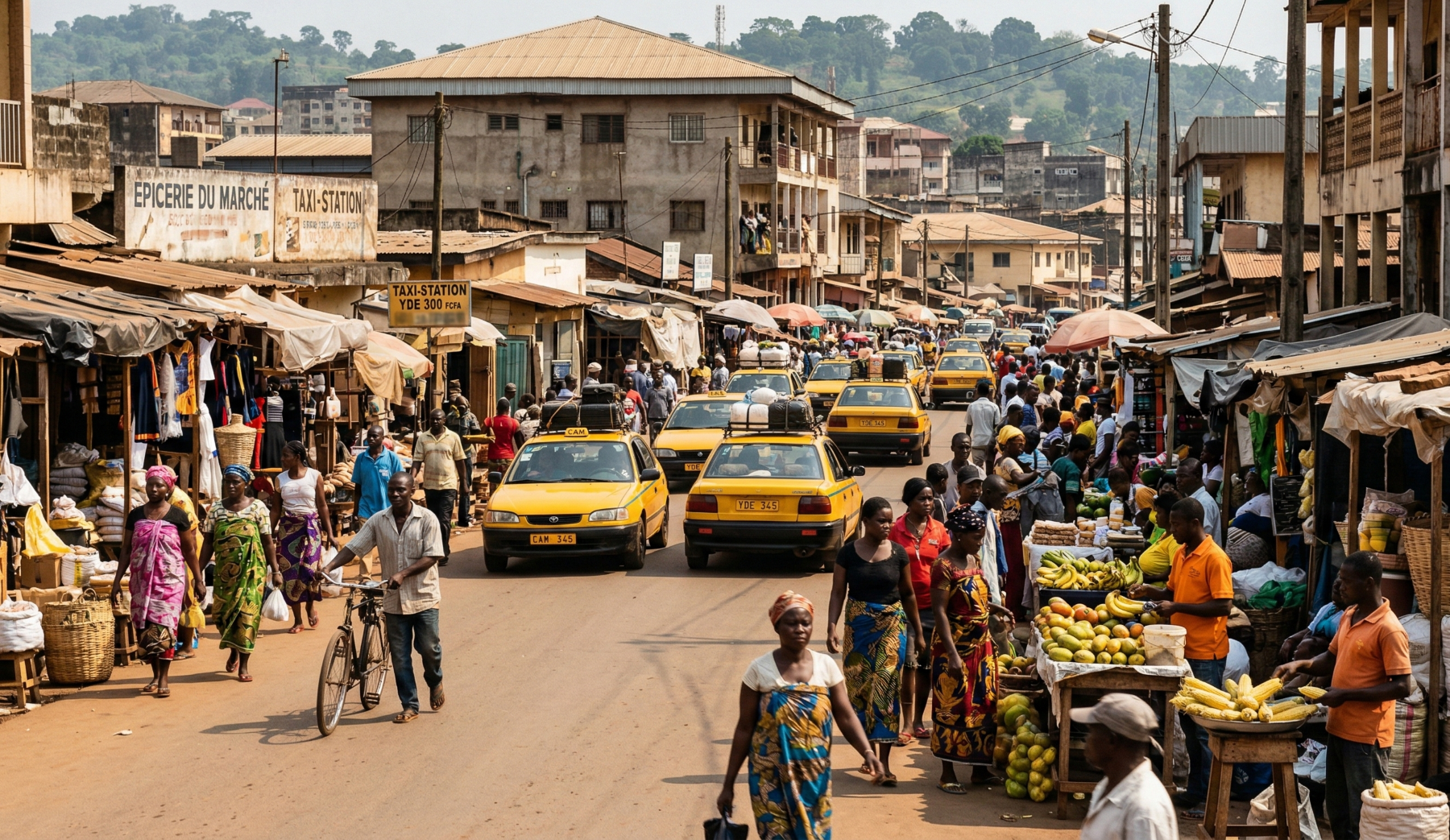
Transportation and Daily Movement
Transport shapes daily rhythm.
Urban residents may rely on:
- Taxis
- Motorbike taxis
- Private vehicles
- Shared minibuses
Traffic congestion can affect commute times, especially during peak hours.
In smaller towns, movement may be easier but public transport options more limited.
Walking remains common for short distances.
Understanding mobility patterns helps adjust expectations.
Electricity, Water and Infrastructure
Infrastructure varies by area.
Some neighbourhoods enjoy:
- Stable electricity
- Reliable water
- Fibre internet
Others may experience:
- Power interruptions
- Water rationing
- Slower connectivity
Infrastructure challenges are part of daily adaptation for many residents.
For global development reference:
World Bank publishes reports on infrastructure development across countries.)
Work Culture and Time Perception
Daily life in Cameroon explained must include work rhythm.
Professional environments may range from:
- Formal corporate settings
- Government offices
- Informal market-based businesses
- Agricultural livelihoods
Time perception may feel different from Western corporate environments.
Delays can occur due to:
- Traffic
- Bureaucracy
- Power outages
- Supply chain interruptions
Flexibility is often required.
Urban vs Rural Daily Experience
Urban life often includes:
- Faster pace
- Greater economic opportunity
- Higher cost
- More social anonymity
Rural life often includes:
- Stronger community interaction
- Agricultural rhythm
- Lower living costs
- Limited infrastructure
Neither experience is superior — they reflect different structural realities.
Social Interaction in Daily Life
Social interaction is woven into daily routine.
Daily life may include:
- Informal greetings
- Community conversation
- Shared meals
- Extended family visits
Social networks remain important for:
- Business referrals
- Employment access
- Crisis support
Understanding social dynamics improves integration.
For family structure:
→ Cameroon Family and Social Expectations Explained
Safety and Practical Awareness
Daily life in Cameroon explained should also address practical awareness.
Safety varies by:
- Neighbourhood
- Time of day
- Economic conditions
Basic precautions are similar to those in many developing urban environments:
- Situational awareness
- Avoiding isolated areas at night
- Securing valuables
For detailed context:
→ Media & Safety Guide
Common Misunderstandings About Daily Life
Common misconceptions include:
- Assuming extreme instability everywhere
- Expecting Western infrastructure standards uniformly
- Over-romanticising rural simplicity
- Underestimating urban complexity
Daily life is often a balance between adaptation and resilience.
Why Daily Life in Cameroon Explained Matters
Understanding daily life in Cameroon explained improves:
- Relocation decisions
- Diaspora return planning
- Business investment judgment
- Cultural adjustment
- Expectation management
Reality-based preparation reduces frustration and cultural shock.
For cultural context:
→ Cameroon Culture and Society
→ Cameroon Cultural Diversity Explained
External Reference
For infrastructure and development context:
See The World Bank Reports
Final Perspective
Daily life in Cameroon explained is not a single narrative. It varies by region, income level, profession, and social network.
Daily living requires adaptation, awareness, and understanding of local systems. With realistic expectations, integration becomes significantly smoother.
This page connects to deeper guides on cost, family structure, safety, and cultural identity.
If you’re planning a visit, you may also want to understand safety conditions:
→ Is Cameroon Safe to Visit
And for planning your trip timing:
→ Best Time to Visit Cameroon
And to know more About Life in Cameroon
-What is Life Like in Cameroon?
To find out more about the best cities to live in
→ Best Cities to Live in Cameroon
And the cost of Living in Cameroon for foreigners
→ Cost of Living in Cameroon for Foreigners