Transport in Cameroon Explained – Public Transport, Roads & Daily Movement
Transport in Cameroon explained properly requires understanding that mobility varies significantly depending on city, region, infrastructure, and income level. Transport in Cameroon explained is not limited to buses and taxis — it includes road conditions, informal systems, traffic rhythm, and rural access challenges.
For residents, returnees, and visitors, daily movement shapes work schedules, business operations, school routines, and social life.
This guide provides a realistic overview of transportation systems across urban and rural Cameroon.
Understanding Transport in Cameroon Explained
When discussing transport in Cameroon explained, we must separate:
- Urban transportation systems
- Intercity travel
- Rural mobility
- Informal transport networks
Transport systems combine formal and informal elements. Adaptability is often required.
Mobility influences:
- Commute times
- Business logistics
- Emergency response
- Social access
For broader daily context:
→ Daily Life in Cameroon Explained
Urban Transportation
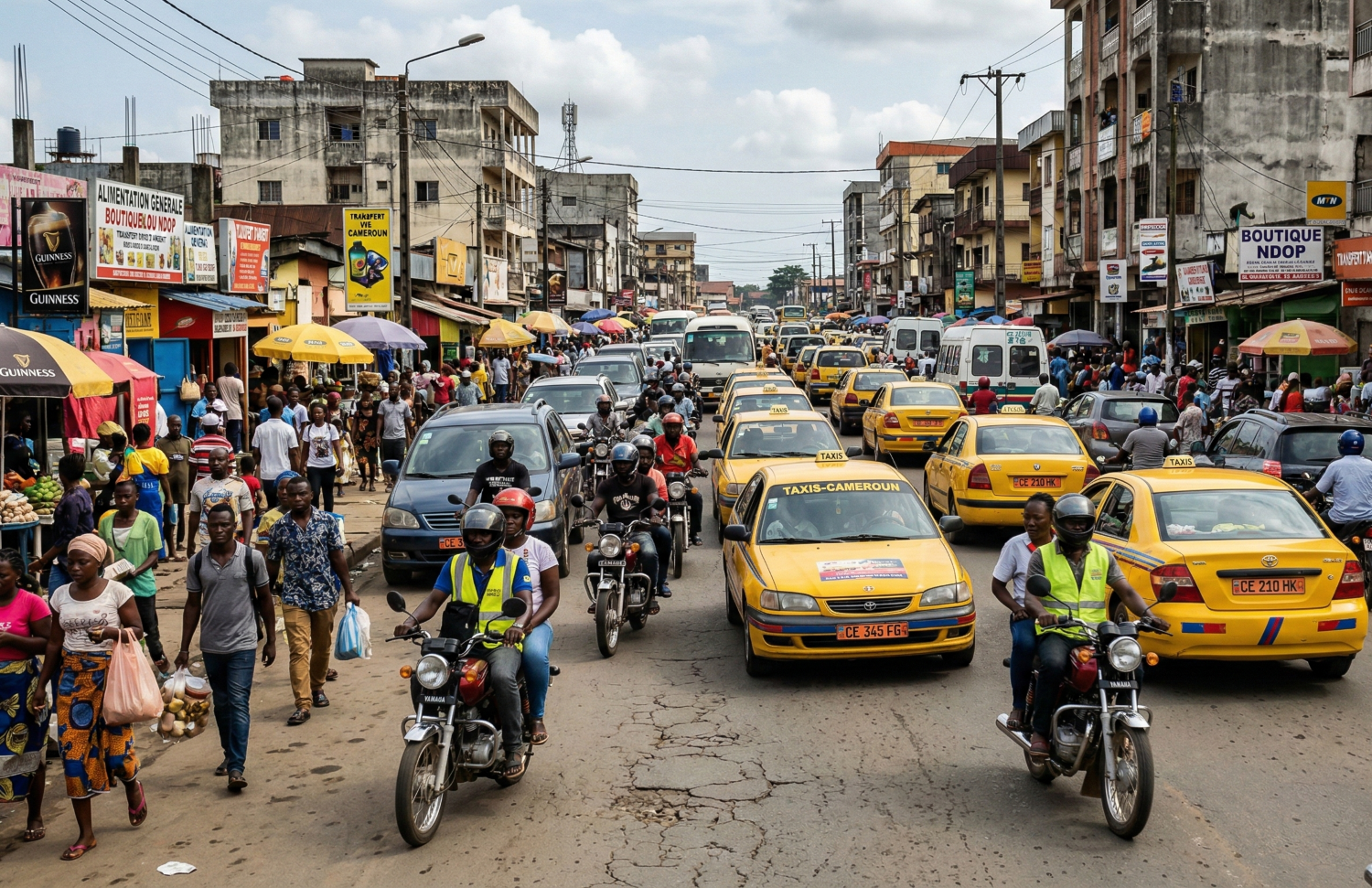
In major cities such as Douala and Yaoundé, common transport options include:
- Taxis
- Motorbike taxis (often called “okada”)
- Shared minibuses
- Private vehicles
Taxis are widely available but may not operate with fixed meters. Fares are often negotiated.
Motorbike taxis are fast and efficient in heavy traffic but may carry higher safety risk.
Public minibuses operate on common routes but may vary in comfort and punctuality.
Traffic congestion is common during peak hours.
Intercity Travel
Transport in Cameroon explained must also include travel between cities.
Common intercity options include:
- Long-distance buses
- Private vehicles
- Shared transport services
Road conditions may vary depending on region and maintenance.
Travel times may extend due to:
- Road construction
- Weather conditions
- Checkpoints
- Traffic density
Intercity travel planning requires flexibility.
Road Infrastructure
Road quality differs across regions.
Major highways connecting major cities are generally more developed than secondary or rural roads.
Rural roads may be affected by:
- Rainy season erosion
- Limited maintenance
- Reduced lighting
Infrastructure reliability affects transport predictability.
For development context:
Rural Transportation
Rural mobility often relies on:
- Motorbikes
- Shared vehicles
- Walking
- Agricultural transport vehicles
In some areas, transport availability may be limited during heavy rainfall or harvest seasons.
Travel to urban centres for services such as healthcare or administrative needs may require significant time planning.
Transport in rural areas reflects infrastructure limitations.
Private Vehicle Ownership
Owning a private vehicle offers flexibility but includes:
- Fuel costs
- Maintenance
- Insurance
- Registration
- Road condition wear and tear
Fuel price fluctuations influence household transport budgets.
Vehicle maintenance may require reliable mechanics and spare part sourcing.
For cost context:
→ Cost of Living in Cameroon Explained
Traffic and Daily Rhythm
Urban traffic congestion can affect:
- Work punctuality
- School schedules
- Business operations
Peak hours often include:
- Early morning commute
- Late afternoon return
Time management often accounts for traffic unpredictability.
Understanding daily rhythm reduces frustration.
Safety Considerations
Transport in Cameroon explained must include safety awareness.
General considerations include:
- Road condition awareness
- Vehicle quality assessment
- Night travel caution in certain areas
- Use of reliable drivers
Motorbike taxis provide speed advantages but may require additional caution.
Situational awareness improves safety.
For broader safety context:
→ Media & Safety Guide
Informal Transport Systems
Informal transport plays a significant role in mobility.
These systems may operate:
- Without strict scheduling
- With flexible routes
- Based on passenger demand
Informal networks increase access but may lack regulatory consistency.
Transport culture often relies on negotiation and adaptability.
Urban vs Rural Transport Differences
Urban areas typically provide:
- Greater transport availability
- More route options
- Higher traffic congestion
Rural areas may provide:
- Fewer transport options
- Longer travel times
- Seasonal accessibility issues
Transport infrastructure shapes economic opportunity.
Common Misunderstandings About Transport
Common oversimplifications include:
- Assuming universal public transport systems
- Expecting strict scheduling adherence
- Underestimating traffic impact
- Ignoring seasonal road variation
Transport in Cameroon explained reflects infrastructure distribution and economic variation.
Why Transport in Cameroon Explained Matters
Understanding transport in Cameroon explained improves:
- Relocation planning
- Business logistics
- Daily scheduling
- Safety awareness
- Budget management
Mobility affects productivity and lifestyle quality.
Clear expectations reduce stress.
For housing and daily structure:
→ Housing in Cameroon Explained
→ Cameroon Culture and Society
External Reference
For infrastructure and transport development data:
For infrastructure and transport development data:
This article on transport in Cameroon explained is part of the broader Daily Life in Cameroon Explained hub.
For full context on housing, cost, and infrastructure:
→ Daily Life in Cameroon Explained
Final Perspective
Transport in Cameroon explained reveals a system built on flexibility, adaptation, and infrastructure variation.
Mobility influences economic opportunity, daily rhythm, and social access.
Understanding transport realities helps residents and returnees plan effectively and navigate daily life with realistic expectations.