Cameroon Explained: What Everyone Gets Wrong About Life, Cost, and Reality
.If you are trying to understand the country, this 'Cameroon explained: what everyone gets wrong' guide will help you see beyond headlines, assumptions, and fragmented opinions.
Cameroon is often discussed—but rarely understood correctly.
Most perceptions are shaped by:
- Headlines
- Social media clips
- Personal anecdotes
- Outdated assumptions
These create strong opinions—but weak understanding.
👉 What people get wrong about Cameroon is not usually intentional.
It is incomplete.
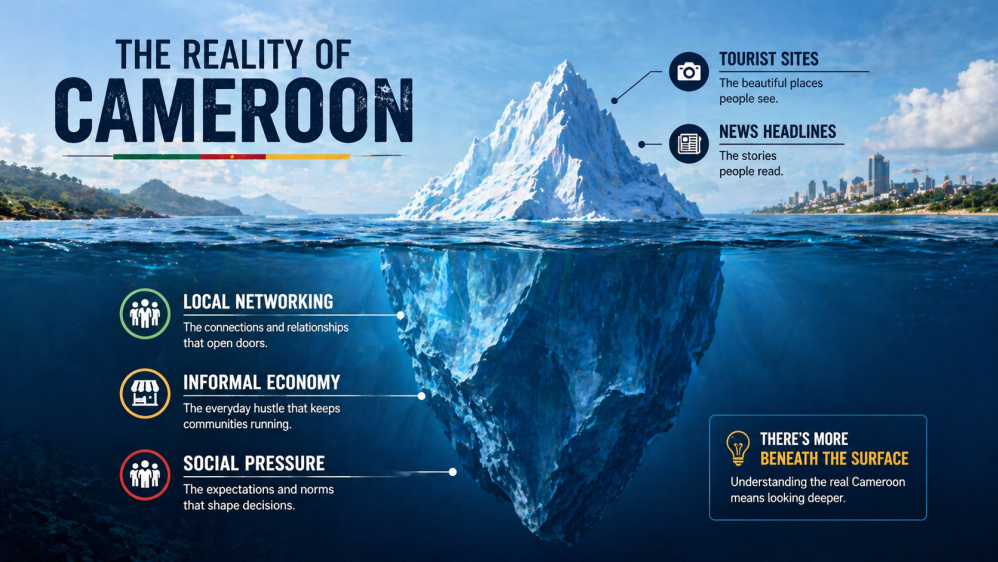 The Reality of Cameroon - Cameroon Explained
Cameroon Is Not One Experience
The most fundamental mistake is assuming Cameroon is a single reality.
In truth, experience varies by:
- Region
- City vs rural setting
- Income level
- Purpose of stay
A visitor in Kribi, a trader in Douala, and a civil servant in Yaoundé live very different realities.
👉 One story cannot define the country.
Headlines Are Not Daily Life
News focuses on disruption.
Daily life is continuity.
Most people:
- Go to work
- Care for family
- Manage routines
Headlines capture moments.
Reality unfolds over time.
👉 Understanding Cameroon requires separating events from everyday life.
“Cheap” vs “Expensive” Is Misleading
Cameroon is often described in extremes.
In reality, cost depends on:
- Lifestyle
- Location
- Income source
- Social responsibilities
Short visits may feel affordable.
Long-term living introduces hidden costs.
👉 Context matters more than comparison.
See:
→ Cost of Traveling to Cameroon
Systems Work Differently—Not Wrongly
Another common misunderstanding is expecting systems to function like Europe or North America.
Cameroon operates through:
- People
- Relationships
- Adaptation
Processes may not be rigid—but they are functional within context.
👉 Understanding comes from observing how things work—not how they “should” work.
Struggle Does Not Mean Hopelessness
Challenges exist—but they do not define the whole picture.
People adapt through:
- Hustle
- Community support
- Informal systems
- Creativity
👉 Survival is not always visible—but it is effective.
Culture Is Not Static
Cameroon is not “traditional” in a frozen sense.
It is constantly evolving through:
- Urbanisation
- Technology
- Migration
You will often find:
- Tradition and modern life in the same space
- Old systems adapting to new realities
👉 Culture is lived—not preserved.
Return Is a Process, Not a Moment
Many misunderstand returning home.
It is often framed as:
- Immediate success
- Or immediate failure
In reality:
- Some return gradually
- Some leave again
- Most adjust over time
👉 Return requires alignment—not pressure.
See:
→ Living in Cameroon as a Returnee
Cameroon Is Not a Problem to Solve
One of the most subtle mistakes is treating Cameroon as something to “fix.”
Cameroon is:
- A complex society
- Operating with limited resources
- Sustained by strong social networks
👉 Understanding grows when observation replaces judgment.
What Context Reveals Instead
When you step back and observe, a clearer picture emerges:
- A country of contrasts
- A population that adapts constantly
- A society balancing tradition and change
Cameroon cannot be understood through extremes.
👉 It is understood through proximity, patience, and perspective.
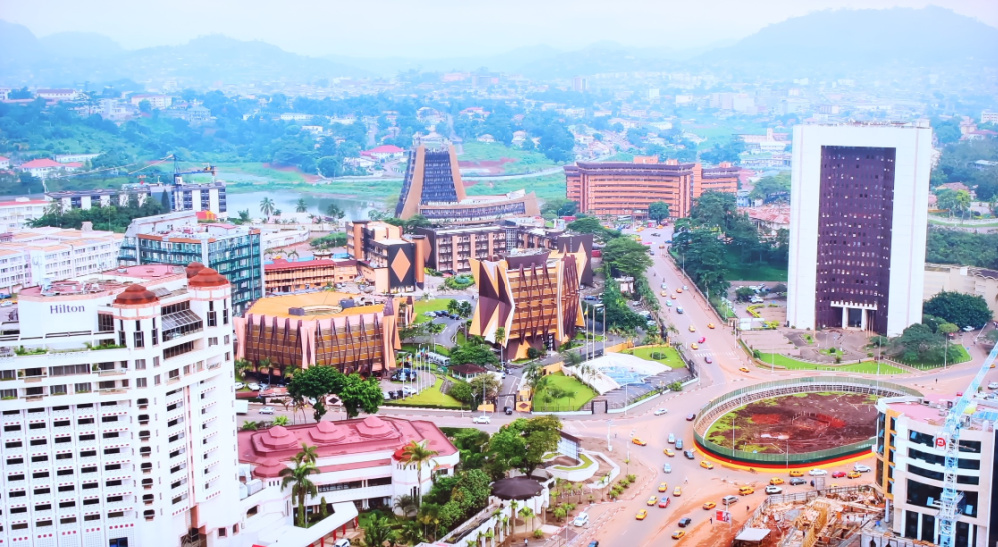
My Personal Experience
From my experience living across multiple regions in Cameroon, I have seen how easily people misunderstand the country when they rely only on fragments.
Cameroon is not something you understand from one visit, one article, or one opinion.
It reveals itself gradually.
What appears confusing at first begins to make sense with time, observation, and interaction.
👉 One key insight:
The more time you spend observing Cameroon, the less you judge it—and the more you understand it.
Why Understanding Cameroon Properly Matters
Misunderstanding has real consequences:
- Poor investment decisions
- Frustrating travel experiences
- Weak policy perspectives
- Strained diaspora relationships
Better understanding leads to:
- Smarter planning
- Reduced frustration
- More effective engagement
How to Understand Cameroon Better
People who understand Cameroon tend to:
- Listen before speaking
- Observe patterns over time
- Learn from local perspectives
- Accept complexity
👉 Understanding is not instant. It is built.
Share This Page
Join the Journey
Stay Informed
Get deeper insights on:
- Living in Cameroon
- Travel and planning
- Diaspora realities
Cameroon Explained - What Everyone Gets Wrong: Explore More
- → What Is Life Like in Cameroon
- → Cameroon Travel Guide
- → Safety and Common Risks in Cameroon
- → Cameroon Cities and Regions Guide
External References for Fact-Checking
- World Bank: Cameroon Economic Update 2026
- Cameroon Intelligence Report: Analyzing Regional Nuances
- Expat Arrivals: The Real Cost of Living in Douala
Final Perspective
As we conclude this guide on what everyone gets wrong about Cameroon, it is essential to realize that the "Truth" of the 237 is found in the middle. It is neither the utopia of your childhood memories nor the dystopia of the nightly news.
Travel warnings and economic reports are indicators of where you need to apply more awareness, not signs that you should give up. My 30 years on the ground have shown me that Cameroon becomes your home only when you respect the local context as it is today, not as you wish it to be.
If you choose to walk with humility, double-check your "family facts," and budget for the reality of 2026, you will find a country that is vibrant, loyal, and full of untapped potential. Know where to go, when to move, and how to listen. Stay aware, stay humble, and the "237" will reward you.
Cameroon is not what everyone says it is.
It is both:
- More ordinary
- And more complex
than stereotypes suggest.
👉 Understanding Cameroon requires moving beyond headlines, nostalgia, and assumptions—into context.