Cameroon Family and Social Expectations Explained – Roles, Marriage & Responsibility
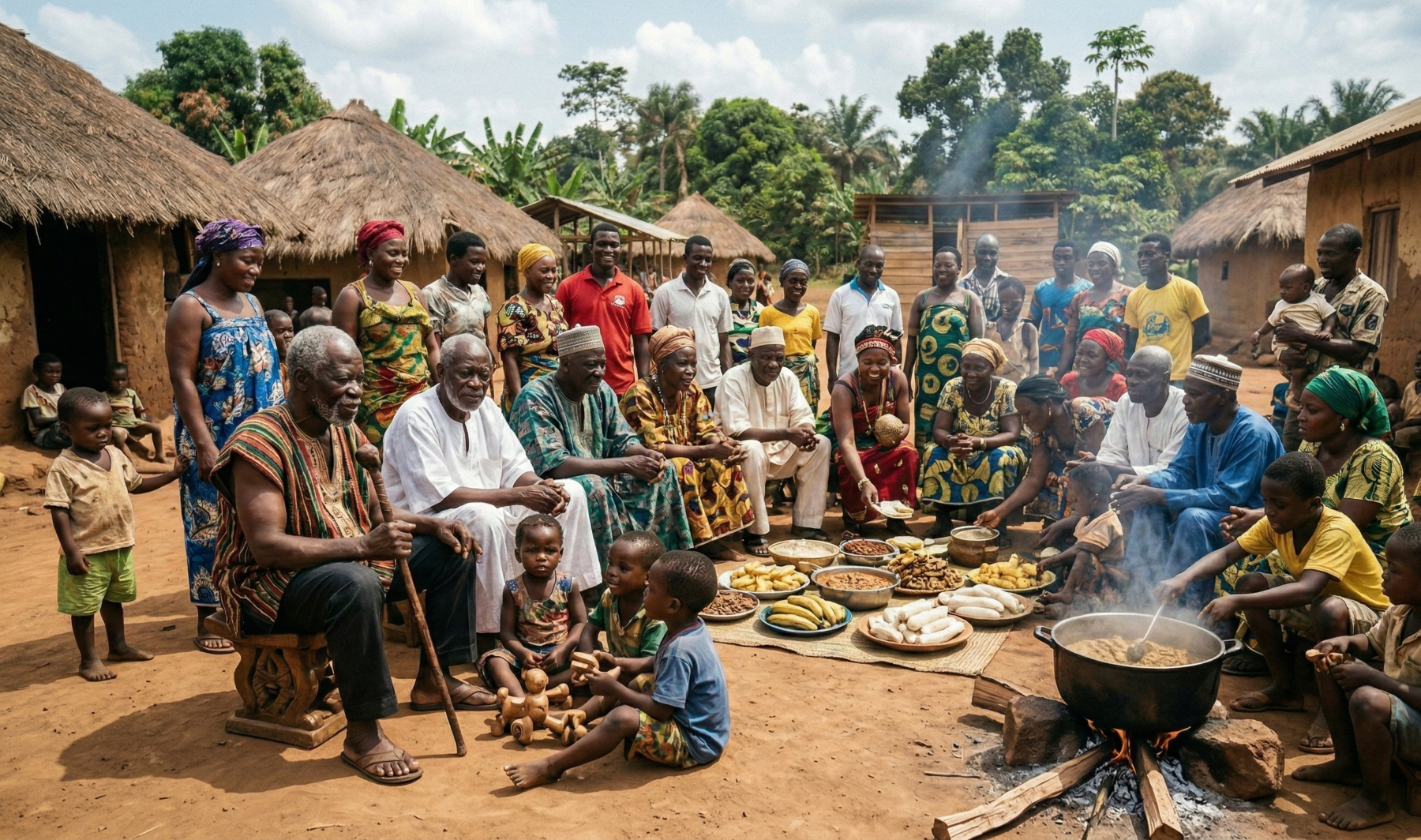
Cameroon family and social expectations explained properly requires understanding that family is not limited to parents and children. Cameroon family and social expectations explained means recognising how extended relatives, elders, community members, and social reputation influence personal decisions.
Family systems in Cameroon are often collective rather than purely individual. Responsibilities may extend beyond the household, shaping marriage, finances, and social behaviour.
This article explains how family structures and social expectations function in everyday life.
Understanding Cameroon Family and Social Expectations Explained
When discussing Cameroon family and social expectations explained, we must look at how identity is often tied to community.
In many contexts, individuals are viewed as:
- Members of extended families
- Representatives of their lineage
- Participants in community networks
This collective identity influences:
- Marriage choices
- Career decisions
- Financial responsibilities
- Public behaviour
Personal decisions may carry social implications.
Extended Family Structure
Cameroon family and social expectations explained must begin with extended family.
Extended family may include:
- Grandparents
- Uncles and aunts
- Cousins
- In-laws
- Community elders
In some communities, extended relatives play advisory roles in major decisions.
Family may function as:
- Economic support system
- Social protection network
- Emotional support structure
The extended family often provides stability in environments where formal systems may be limited.
Marriage Expectations
Marriage in Cameroon family and social expectations explained often involves communal recognition.
Marriage may include:
- Introduction ceremonies
- Family negotiations
- Traditional rites
- Religious validation
Marriage can represent alliance between families, not just individuals.
Expectations may include:
- Financial responsibility
- Stability
- Respect for elders
- Participation in extended family events
Marriage decisions sometimes consider family compatibility as well as personal preference.
Gender Roles and Social Norms
Cameroon family and social expectations explained must address gender roles carefully.
Traditional expectations may shape:
- Division of household responsibilities
- Public leadership roles
- Financial contribution expectations
However, urbanisation and education have influenced evolving perspectives.
Gender roles may differ by:
- Region
- Religious affiliation
- Urban vs rural setting
Modern influence interacts with tradition rather than fully replacing it.
Social Responsibility and Financial Expectations
In many contexts, individuals may be expected to support:
- Parents
- Younger siblings
- Extended relatives
Financial responsibility is often viewed as a sign of maturity and success.
This expectation can feel heavy for diaspora members returning home, especially if economic conditions differ from abroad.
Understanding these norms reduces resentment and misunderstanding.
For economic structure:
→ Business & Survival Guide
Respect and Hierarchy
Respect for elders and authority figures is central in Cameroon family and social expectations explained.
Respect may be shown through:
- Formal greetings
- Deference in conversation
- Public acknowledgment of seniority
Age and experience often influence social authority.
Hierarchy is not necessarily oppressive; it often functions as an organising principle.
Urban vs Rural Expectations
Urban environments may encourage:
- Greater individual autonomy
- Smaller household units
- Professional identity emphasis
Rural communities may emphasise:
- Collective decision-making
- Traditional rites
- Stronger community oversight
Both reflect different expressions of Cameroon family and social expectations explained.
Diaspora and Return Tension
For diaspora members, Cameroon family and social expectations explained becomes especially relevant.
Challenges may include:
- Differing expectations about financial support
- Cultural shifts in marriage roles
- Perceived obligation to extended family
- Adjustment to community involvement
Understanding expectations beforehand reduces conflict during return visits.
For broader context:
→ Cameroon Culture and Society
→ Daily Life in Cameroon
Common Misunderstandings
Common oversimplifications include:
- Interpreting family involvement as interference
- Assuming financial expectation equals exploitation
- Viewing collective thinking as lack of independence
In many cases, these expectations developed historically as survival systems.
Collective responsibility once ensured stability in uncertain economic environments.
Why Cameroon Family and Social Expectations Explained Matters
Understanding Cameroon family and social expectations explained improves:
- Marriage planning
- Business negotiation
- Return relocation decisions
- Conflict resolution
- Social adaptation
Cultural context clarifies motivations behind behaviour.
Understanding does not require agreement, but it enables informed interaction.
External Reference
For broader social structure studies:
World Bank Reports on Family systems and social protection structures
Part of the Cameroon Culture and Society Guide
This article on Cameroon family and social expectations explained is part of the broader Cameroon Culture and Society hub.
For complete cultural context:
→ Cameroon Culture and Society
Final Perspective
Cameroon family and social expectations explained reveals a system built on collective responsibility, extended networks, and social continuity.
These structures evolved historically to provide stability and protection.
Understanding them allows clearer navigation of marriage, financial responsibility, and community interaction.
Cultural literacy reduces friction and strengthens relationships.