Cameroon Cultural Diversity Explained – Regions, Identity & Social Differences
Cameroon cultural diversity explained properly requires more than listing ethnic groups or languages. Cameroon cultural diversity explained in depth means understanding how geography, history, language, religion, migration, and economics interact to shape daily life across different regions of the country.
Cameroon is often described as “Africa in miniature” because it contains coastal zones, forests, mountains, savannah, and major urban centres within one national boundary. These environmental differences influence how communities live, organise themselves, and relate to one another.
Understanding this diversity is essential for visitors, diaspora returnees, researchers, and anyone trying to interpret social behaviour accurately.
Understanding Cameroon Cultural Diversity Explained
When we discuss Cameroon cultural diversity explained, we are referring to the coexistence of multiple cultural systems within a single national framework.
Diversity is visible in:
- Language patterns
- Marriage traditions
- Religious practices
- Dress and symbolism
- Food preparation
- Authority structures
- Communication styles
No single region defines the entire country. What feels culturally “normal” in one area may differ significantly in another.
This does not represent contradiction — it represents layered identity.
For geographic context:
→ Cameroon Map Guide
→ Travel & Geography Guide
Geography as the Foundation of Cultural Difference
Geography plays a powerful role in Cameroon cultural diversity explained.
Coastal regions historically engaged in trade and maritime activity. Highlands developed agricultural economies and strong communal land systems. Savannah regions evolved under different climatic pressures and historical leadership structures.
Environmental conditions influence:
- Housing style
- Economic focus
- Community organisation
- Seasonal rhythms
For example, mountainous terrain often strengthens tight-knit community interaction due to limited mobility, while coastal trade centres encourage exposure to diverse influences.
Geography shapes culture quietly but consistently.
Language and Identity
Language and Identity
Language is one of the strongest markers of identity.
Official languages:
- English
- French
In addition, numerous local languages are spoken across regions. Language affects:
- Education access
- Administrative interaction
- Community belonging
- Social perception
Cameroon cultural diversity explained must acknowledge that language differences sometimes reflect historical administrative divisions as well as deeper cultural heritage.
Language is not merely communication — it carries worldview.
For national structure:
→ Cameroon Quick Facts
Historical Influences on Cultural Structure
Historical developments influence Cameroon cultural diversity explained in important ways.
Pre-colonial kingdoms, colonial administration, missionary activity, and post-independence governance structures all left cultural marks.
These influences shaped:
- Education systems
- Legal structures
- Religious distribution
- Urban development patterns
Modern urban centres reflect blended influences from multiple regions and backgrounds, creating cultural mixing rather than cultural erasure.
Understanding historical layering prevents oversimplification.
Traditional Authority Systems
In many communities, traditional leadership structures coexist alongside national governance.
These may include:
- Community chiefs
- Elders councils
- Cultural custodians
Traditional authority may influence:
- Dispute resolution
- Marriage validation
- Land management
- Cultural festivals
Cameroon cultural diversity explained must include this dual structure of formal state institutions and informal traditional systems.
These systems operate simultaneously in many areas.
Urban Cultural Mixing
Cities such as Douala and Yaoundé demonstrate how Cameroon cultural diversity explained becomes dynamic rather than static.
Urban areas:
- Bring together people from different regions
- Encourage adaptation and cross-cultural interaction
- Blend language use
- Modify traditional practices
However, regional identity rarely disappears entirely. Instead, it adapts to urban life.
Urban culture is often a negotiation between tradition and modernity.
For urban daily life:
→ Daily Life in Cameroon
Religion and Regional Variation
Religion contributes significantly to Cameroon cultural diversity explained.
Different regions may display varying religious majorities. Christianity, Islam, and traditional belief systems all influence social norms.
Religion shapes:
- Marriage ceremonies
- Funeral rites
- Moral instruction
- Public holidays
- Community gatherings
Religious variation adds another layer to cultural diversity.
For global reference on intangible cultural heritage:
UNESCO Intangible Cultural Heritage
Social Expectations Across Regions
Expectations regarding:
- Respect
- Family responsibility
- Gender roles
- Public behaviour
…may differ subtly by region.
In some communities, extended family involvement in decision-making is strong. In others, urban life has increased individual autonomy.
Cameroon cultural diversity explained must recognise that expectations shift with context rather than remaining fixed.
Economic Influence on Cultural Expression
Economic structure also shapes culture.
Agricultural communities may prioritise land continuity and family labour systems. Urban commercial centres may prioritise speed, efficiency, and market relationships.
Economic activity influences:
- Daily rhythm
- Social gathering patterns
- Dress
- Interpersonal expectations
Culture adapts to economic reality.
For economic structure:
→ Business & Survival Guide
Common Misunderstandings
Cameroon cultural diversity explained often suffers from oversimplification:
- Assuming uniform customs nationwide
- Treating one regional experience as universal
- Ignoring rural-urban variation
Understanding diversity prevents stereotyping.
Why Cameroon Cultural Diversity Explained Matters
Understanding Cameroon cultural diversity explained improves:
- Relocation planning
- Business negotiation
- Social integration
- Diaspora return preparation
- Inter-regional understanding
Cultural awareness reduces friction and unrealistic expectations.
It also strengthens appreciation for complexity rather than seeking uniformity.
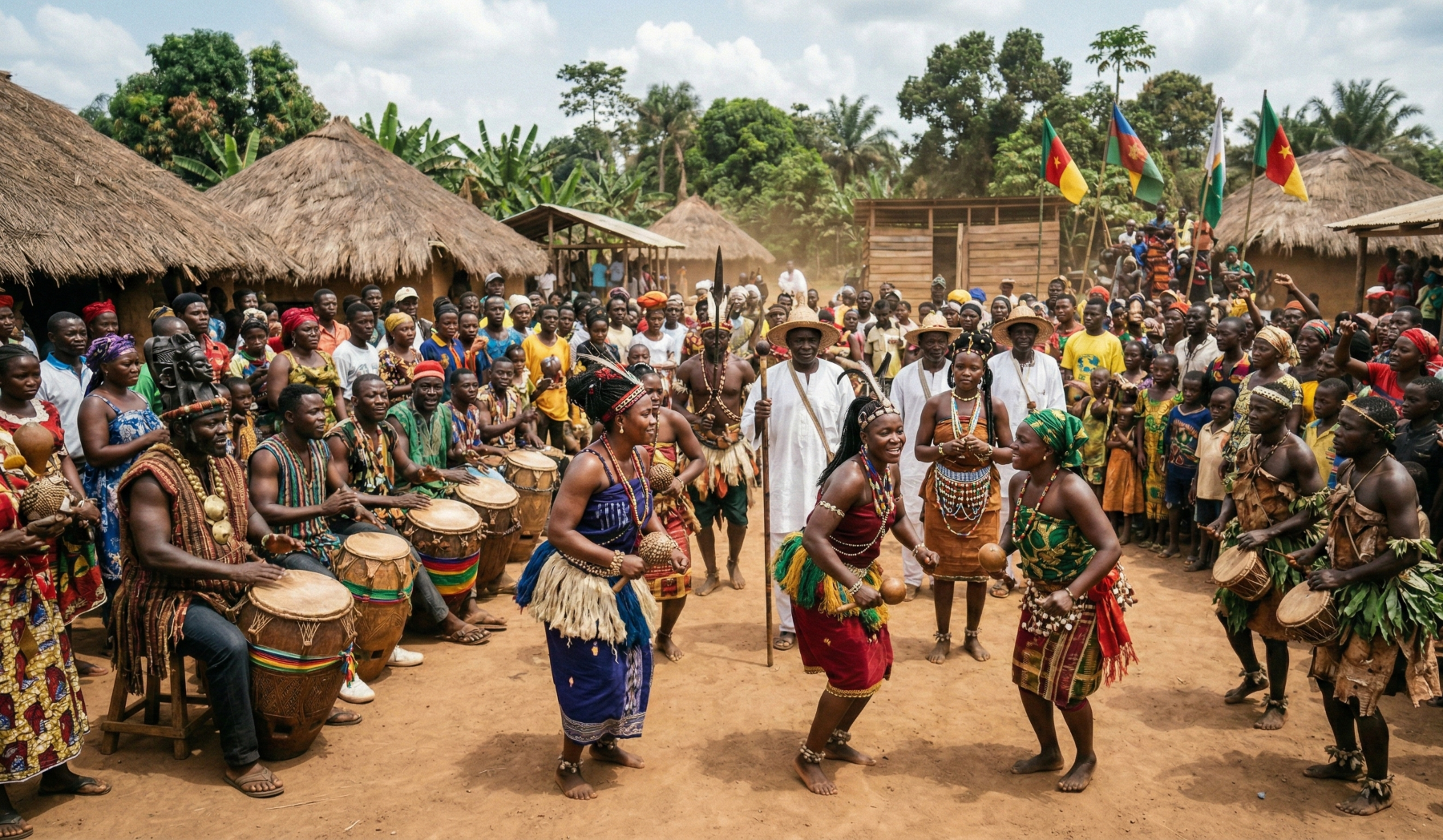
Part of the Cameroon Culture and Society Guide
This article is part of the broader Cameroon Culture and Society hub.
For a complete overview of traditions, family structure, and identity:
→ Cameroon Culture and Society
Final Perspective
Cameroon cultural diversity explained is not about listing tribes or languages. It is about understanding how multiple cultural systems operate simultaneously within one nation.
Diversity is structural, not decorative.