Important Personalities in Cameroon: People Who Shaped a Nation
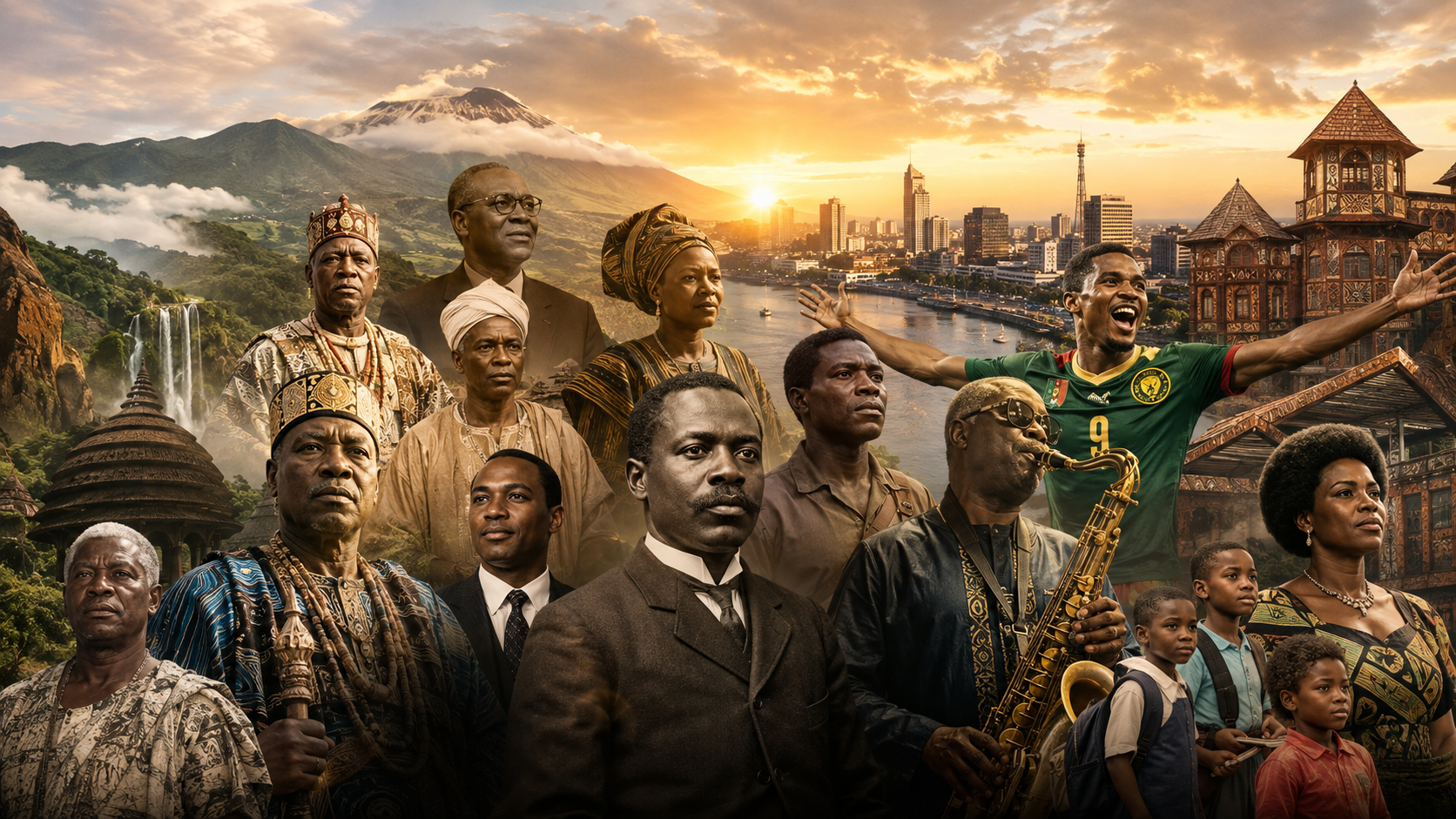
A country is more than its borders, mountains, institutions and cities. It is also the story of its people. Some of the important personalities in Cameroon lived centuries ago. Others confronted colonial rule, defended their communities, developed systems of writing and governance, fought for independence, created music heard around the world, wrote books that challenged generations, or carried Cameroon's name onto the world's greatest sporting stages.
Some died for what they believed.
Others created institutions, ideas, inventions or cultural traditions that survived them.
And some left complicated legacies that deserve to be studied rather than simplified.
This section of All About Cameroon is dedicated to telling those stories.
|
IMPORTANT: |
IMPORTANT: This is not intended to be a ranking of the "greatest Cameroonians." Cameroon has hundreds of personalities worthy of serious documentation. Inclusion does not mean that every action of a person is endorsed. Our purpose is to document, explain and preserve important stories as accurately and fairly as possible. |
Why Important Personalities in Cameroon Matter
This page on Important Personalities in Cameroon matters a lot. History can become strangely impersonal.
We remember dates: 1884. 1914. 1960. 1961.
We remember colonial powers, political movements, wars and constitutions.
But behind those dates were human beings making difficult choices.
Rudolf Duala Manga Bell challenged German colonial expropriation and was executed in Douala in 1914. His resistance and death became an enduring part of Cameroon's historical memory.
Ibrahim Njoya combined traditional authority with remarkable intellectual and administrative innovation. His achievements included reforms to Bamum political organisation and, most famously, the development of the Bamum writing system.
And Ruben Um Nyobè became one of the defining personalities of the struggle for independence and reunification.
Their stories are different.
Together, however, they reveal something essential:
Cameroon was not simply shaped by events. It was shaped by people responding to events.
From Kingdoms to the Modern Republic
Cameroon's history did not begin with European colonialism.
Long before the modern state existed, communities across the territory had systems of political authority, trade, diplomacy, religion, agriculture, craftsmanship and conflict resolution.
The north developed powerful Islamic political traditions and kingdoms.
The Grassfields became home to sophisticated chiefdoms and kingdoms.
Coastal communities developed extensive commercial relationships.
Forest communities maintained their own systems of authority and social organisation.
That means our exploration of important Cameroonian personalities must go beyond modern politicians.
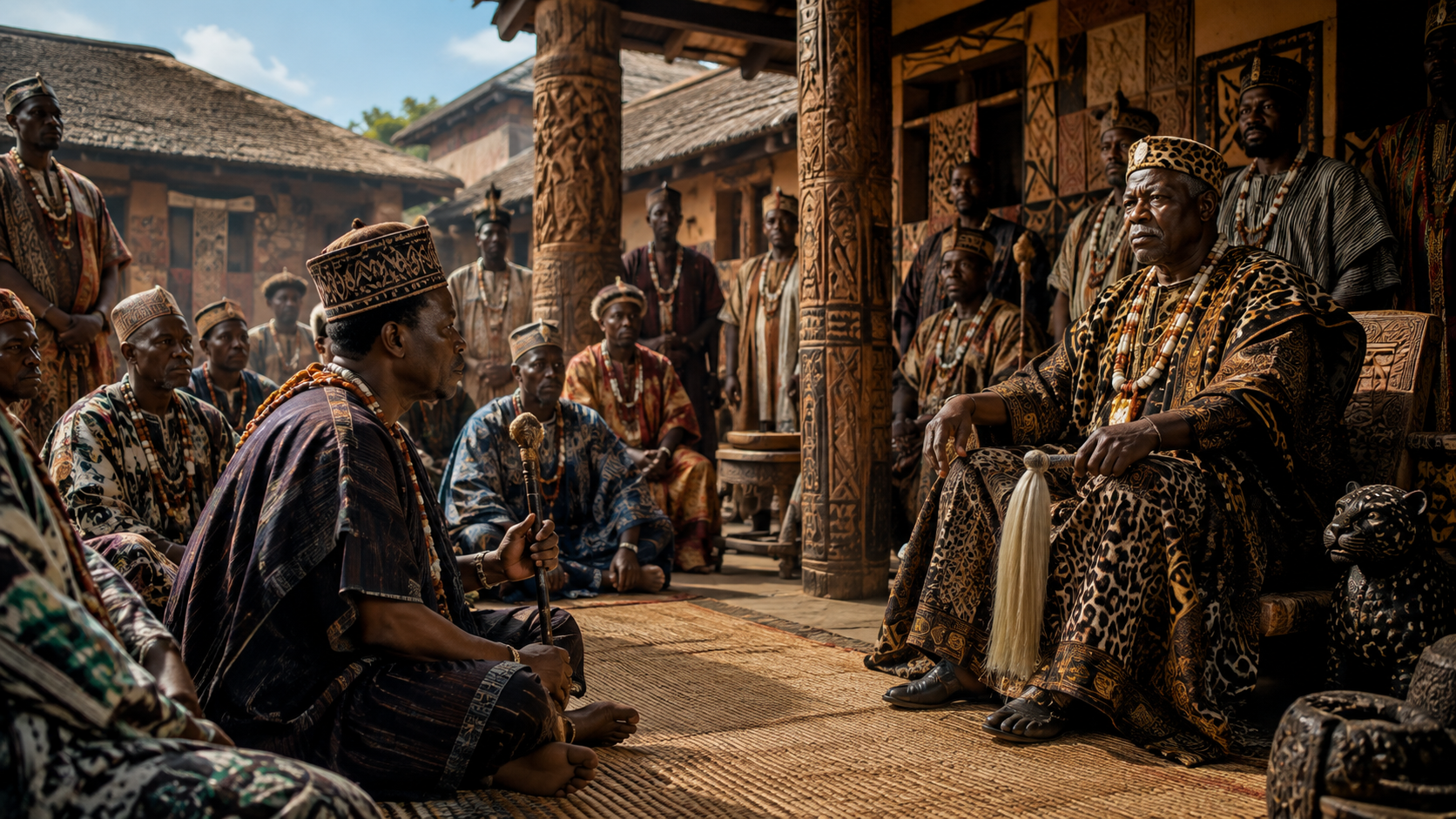
Traditional rulers such as Sultan Njoya, Fon Asonganyi and other historic leaders belong in this story because understanding Cameroon requires understanding the societies that existed before, during and after colonial rule.
Resistance, Colonialism and the Price of Courage
Some Important Personalities in Cameroon emerged during periods of confrontation with colonial power.
Rudolf Duala Manga Bell is one of the strongest examples.
His story is especially important because resistance was not simply a battlefield affair. Manga Bell pursued petitions and legal and political avenues while opposing German policies affecting Duala land and rights. His execution transformed him into an enduring symbol of resistance.
Other personalities, including Martin-Paul Samba, also became associated with resistance to German colonial authority.
Later generations would confront French and British colonial structures and the difficult questions of independence and reunification.
These stories deserve careful treatment.
We should resist the temptation to turn history into mythology. Heroes were human beings. Political movements contained disagreements. Decisions were made under circumstances very different from ours.
Our biographies will therefore ask not only:
What did this person do?
But also:
What was happening around them, why did they act, what were the consequences, and how should we understand their legacy today?
Independence and the Making of Modern Cameroon
The struggle over Cameroon's political future produced another generation of important personalities in Cameroon.
Ruben Um Nyobè became a leading advocate of independence and reunification and served as secretary-general of the Union des Populations du Cameroun (UPC).
Other names—including Félix-Roland Moumié, Ernest Ouandié, John Ngu Foncha, Ahmadou Ahidjo and many others—belong to the broader and often contested story of how modern Cameroon emerged.
This section will not present political history as a collection of saints and villains.
Instead, individual profiles will examine available evidence, historical context, achievements, controversies and consequences.
That distinction matters.
Remembering history should not require rewriting it.
Important Personalities in Cameroon: Thinkers, Writers, Artists and Cultural Giants
Not everyone who changes a nation occupies a palace or political office.
Sometimes a saxophone does it.
Sometimes a novel does it.
Sometimes a classroom, laboratory, football pitch or stage does it.
Cameroon's cultural influence extends far beyond its borders.
Writers such as Mongo Beti, Ferdinand Oyono and others helped generations examine colonialism, identity, power and society.
Musicians such as Manu Dibango carried Cameroonian and African sounds into global popular culture.
Artists, filmmakers, academics and thinkers continue to shape how Cameroon—and Africa more broadly—is understood.
Their contribution is national history too.
Sporting Legends Who Carried Cameroon to the World
Few things have united Cameroonians emotionally quite like sport, especially football.
Generations remember the exploits of Roger Milla, Samuel Eto'o, Thomas N'Kono, Rigobert Song, Patrick Mboma and many others.
Their significance goes beyond trophies.
At major international tournaments, athletes become visible representatives of a country. Moments on a football field can enter national memory almost as powerfully as political events.
Our personalities collection will therefore document sporting achievement alongside political, intellectual and cultural history.
The Women Who Must Not Be Forgotten
A serious collection of important personalities in Cameroon cannot become a gallery dominated by men.
Cameroonian women have shaped political life, education, entrepreneurship, literature, agriculture, culture, medicine, activism, sport and community leadership.
Some are internationally known.
Others exercised enormous influence without receiving equivalent historical attention.
One objective of this project will therefore be to actively identify and document important Cameroonian women from different periods, regions and professions.
This is not about inserting names simply to satisfy a quota.
It is about correcting an obvious problem in historical storytelling:
Influence is not always proportional to how much documentation survives about a person.
Beyond Famous Names: The Heroes History Almost Forgot
This may eventually become the most important part of the project.
Cameroon's history does not belong only to nationally famous personalities.
There were local rulers who protected communities.
Teachers who transformed generations.
Women who organised communities.
Doctors and nurses who served during crises.
Entrepreneurs who built industries.
Religious figures who created schools and hospitals.
Researchers, farmers, artists, administrators and ordinary citizens whose work fundamentally affected their communities.
Some deserve national rediscovery.
Through this project, All About Cameroon will gradually document such personalities where reliable historical evidence can be found.
How We Will Choose Personalities
The collection will grow gradually rather than becoming an uncontrolled list of celebrities.
A person may be considered because of significant contribution to one or more areas such as:
- history and resistance;
- traditional leadership;
- independence and nation-building;
- governance and public service;
- education and scholarship;
- science and innovation;
- literature and journalism;
- music, film and arts;
- business and entrepreneurship;
- humanitarian or community service;
- women's advancement;
- sport;
- preservation of Cameroonian culture.
Popularity alone will not determine inclusion.
Neither will ethnicity, region, language or political affiliation.
The central question will be:
Did this person's life, work, ideas, sacrifice or achievements make a meaningful contribution to Cameroon or to the world's understanding of Cameroon?
How Each Biography Will Be Written
Every major personality would receive a dedicated supporting article.
We will have a consistent biography format:
Early Life → Historical Context → Rise/Work → Major Contribution → Challenges/Controversies → Legacy → Why the Person Still Matters → My Perspective → Sources & Further Reading.
Where facts are disputed, we would say so.
Where evidence is incomplete, we would say so.
Where someone made both important contributions and serious mistakes, both would appear.
Where To Begin?
Our first 10 biographies would be diverse and will include the following:
Foundational biographies
- Fon Asonganyi — Bangwa/Fontem history and traditional leadership. A recorded historical account attributed to the Fon of Fontem provides valuable material concerning early encounters between the Bangwa and German colonial administration.
- Rudolf Duala Manga Bell — resistance, land and colonial injustice.
- Sultan Ibrahim Njoya — leadership, invention, writing and Bamum civilisation.
- Ruben Um Nyobè — independence and reunification.
- Martin-Paul Samba — anti-colonial resistance.
- Félix-Roland Moumié — nationalism and independence.
- John Ngu Foncha — Southern Cameroons and reunification.
- Manu Dibango — music and international cultural influence.
- Roger Milla — football and Cameroon's global sporting image.
- A major Cameroonian female pioneer — which we would research carefully rather than selecting someone merely to fill the category.
My Personal Perspective
This particular project means something different to me.
I grew up in Cameroon hearing names from history, traditional leadership, politics, football and culture. Yet, as with many people, knowing a name did not always mean knowing the full story behind that name.
That becomes more obvious with time.
The older I become, the more important I believe it is that we document the people who came before us—not simply to praise them, but to understand them.
Cameroon has produced courageous leaders, brilliant thinkers, gifted artists, extraordinary athletes and ordinary people who performed extraordinary acts.
Some are celebrated.
Some are controversial.
Some are almost forgotten.
Their stories deserve to survive.
And our children deserve somewhere they can discover those stories in language that is engaging, accessible and supported by evidence.
Help Us Preserve Cameroon's Human Story
Do you know an important Cameroonian personality whose story deserves to be documented?
The person may come from any of Cameroon's ten regions and any field of achievement.
We particularly welcome suggestions concerning important historical personalities whose contributions are poorly documented online.
External References / Further Reading
For readers interested in exploring Cameroon's history and the wider historical context surrounding many of the personalities featured in this collection:
- Encyclopaedia Britannica — Cameroon
- Deutsches Historisches Museum — German Colonialism: Fragments Past and Present
Related Links
Final Perspective
Nations inherit more than territory.
They inherit courage.
They inherit mistakes.
They inherit ideas.
They inherit unfinished dreams.
The story of Cameroon's important personalities is therefore not merely a journey into the past. It is also a conversation with the future.
Rudolf Duala Manga Bell's resistance raises questions about justice.
Sultan Njoya's innovations remind us what intellectual imagination can achieve.
Independence leaders remind us that political freedoms were contested by real people who accepted extraordinary risks.
Artists remind us that culture can cross borders.
Athletes remind us that a country's flag can suddenly become visible to billions.
And lesser-known heroes remind us that history is often made far from cameras.
Their lives belong to different generations. Their stories belong to Cameroon.
This section exists to preserve those stories—carefully, honestly and beautifully—for the generations still to come.
Stay Connected
If you want deeper insight:
Subscribe to receive:
- Travel guidance
- Living realities
- Practical updates
- Practical, Useful Information on Cameroon
Follow the Journey
👉 Follow “All About Cameroon” for real-time insights