King Rudolf Duala Manga Bell: The King Who Would Not Kneel
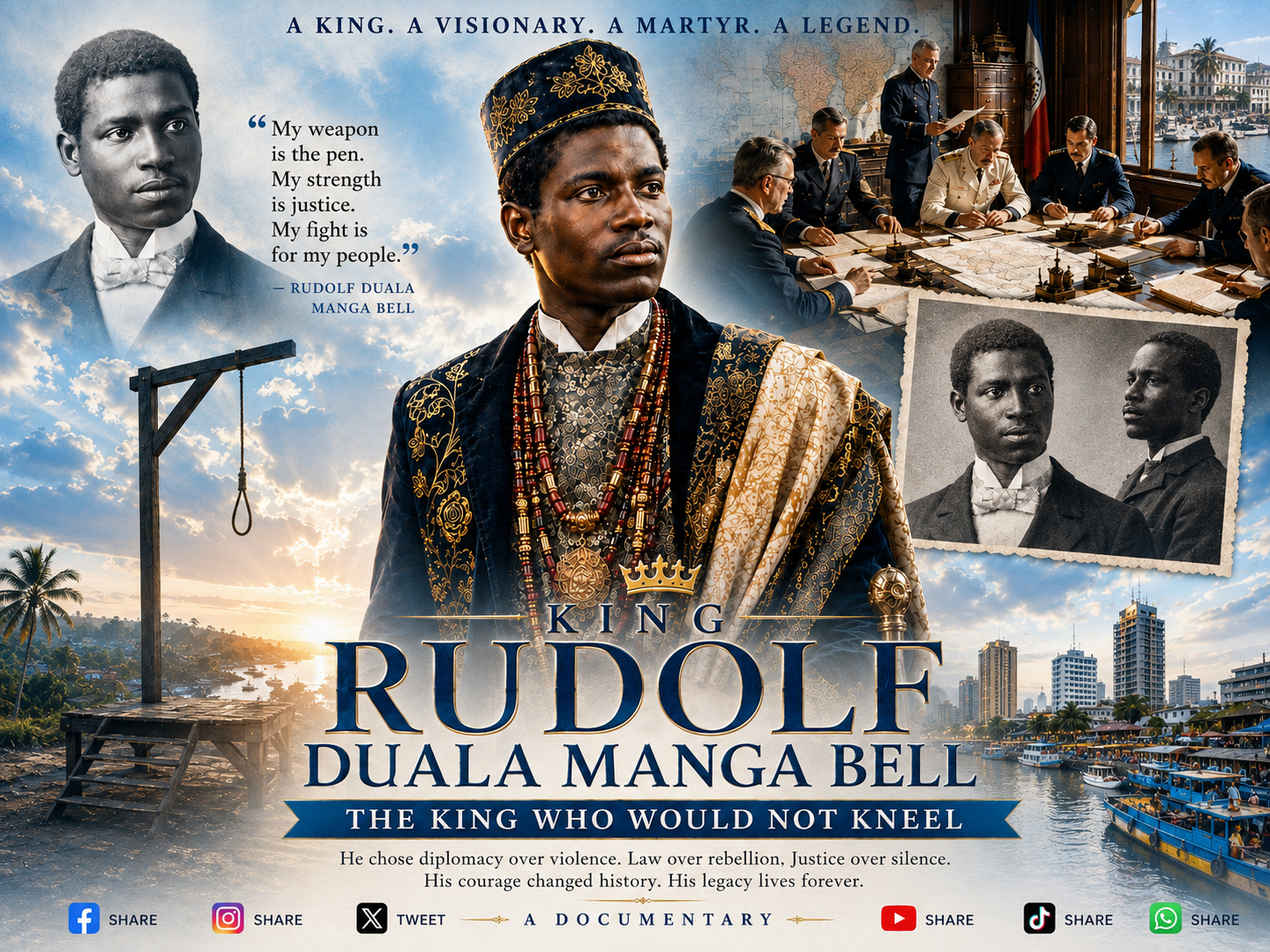
King Rudolf Duala Manga Bell is one of the most important figures in Cameroon's colonial history. A traditional ruler, educated intellectual and determined defender of his people's rights, he challenged German colonial plans to take Duala land and relocate communities from strategically important parts of Douala.
His story is remarkable not only because he resisted colonial injustice, but because of the methods he chose.
King Rudolf Duala Manga Bell did not begin his struggle with weapons.
He used petitions, letters, diplomacy, political contacts and legal arguments. He believed agreements should be respected and that even colonial authorities should be accountable to the law.
That conviction eventually cost him his life.
On 8 August 1914, German colonial authorities executed him alongside his close associate Adolf Ngoso Din.
More than a century later, the story of King Rudolf Duala Manga Bell remains deeply relevant to Cameroon.
It is a story about land, justice, courage, leadership and the dangerous consequences that can follow when those in power refuse to accept legitimate opposition.
Who This Article Is For?
This article is useful for:
- Cameroonians who want to understand their history more deeply
- Students and teachers studying colonial Cameroon
- Members of the diaspora reconnecting with Cameroonian history
- Visitors interested in the history of Douala
- Researchers studying German colonialism in Africa
- Readers interested in peaceful political resistance
- Younger generations discovering important personalities in Cameroon
It is also an important starting point for anyone trying to understand why land, identity, traditional authority and colonial history remain significant subjects in Cameroon today.
Early Life of King Rudolf Duala Manga Bell
King Rudolf Duala Manga Bell was born in the 1870s into the influential Bell ruling family of the Duala people in what is today Douala.
He was the son of Manga Ndumbe Bell and grew up within a political and commercial environment already deeply connected to European traders and colonial interests around the Wouri estuary.
Unlike many African leaders of his generation, Rudolf received extensive exposure to German education.
He attended a German government school in Cameroon, learned German fluently and later spent several years studying in the German Empire.
That education would become one of the defining elements of his later struggle.
He understood German language, administration and political institutions well enough to challenge colonial authorities in terms they could not easily dismiss.
His resistance was therefore not based merely on anger.
It was informed.
He understood treaties.
He understood petitions.
He understood political pressure.
And he believed that the colonial administration should be held to the standards it claimed to represent.
Becoming King Rudolf Duala Manga Bell
After the death of his father, Rudolf succeeded him in 1908 as head of the Bell lineage.
During the early period of his leadership, his relationship with the German colonial administration was not defined by constant confrontation.
He initially maintained working relations with colonial officials.
That point is important.
King Rudolf Duala Manga Bell was not simply opposed to everything European or German.
His conflict developed around specific colonial policies, especially the question of Duala land.
This makes his story more complex and more powerful.
He was prepared to cooperate where cooperation seemed reasonable.
But when he believed that the rights of his people were being violated, cooperation gave way to resistance.
King Rudolf Duala Manga Bell and the Duala Land Crisis
The defining confrontation began when German colonial authorities pursued plans involving the expropriation of land and relocation of Duala communities from strategically valuable areas around the growing port city.
The issue was not simply about houses.
Land around the Wouri River represented economic opportunity, ancestral presence, political authority and cultural identity.
Douala was already becoming one of the most commercially important places in the colony.
Control of riverfront land therefore had enormous consequences.
German plans threatened to separate Duala communities from areas they had occupied and used for generations.
King Rudolf Duala Manga Bell believed that these measures violated previous agreements and legitimate Duala rights.
He decided to challenge them.
His Weapon Was the Law
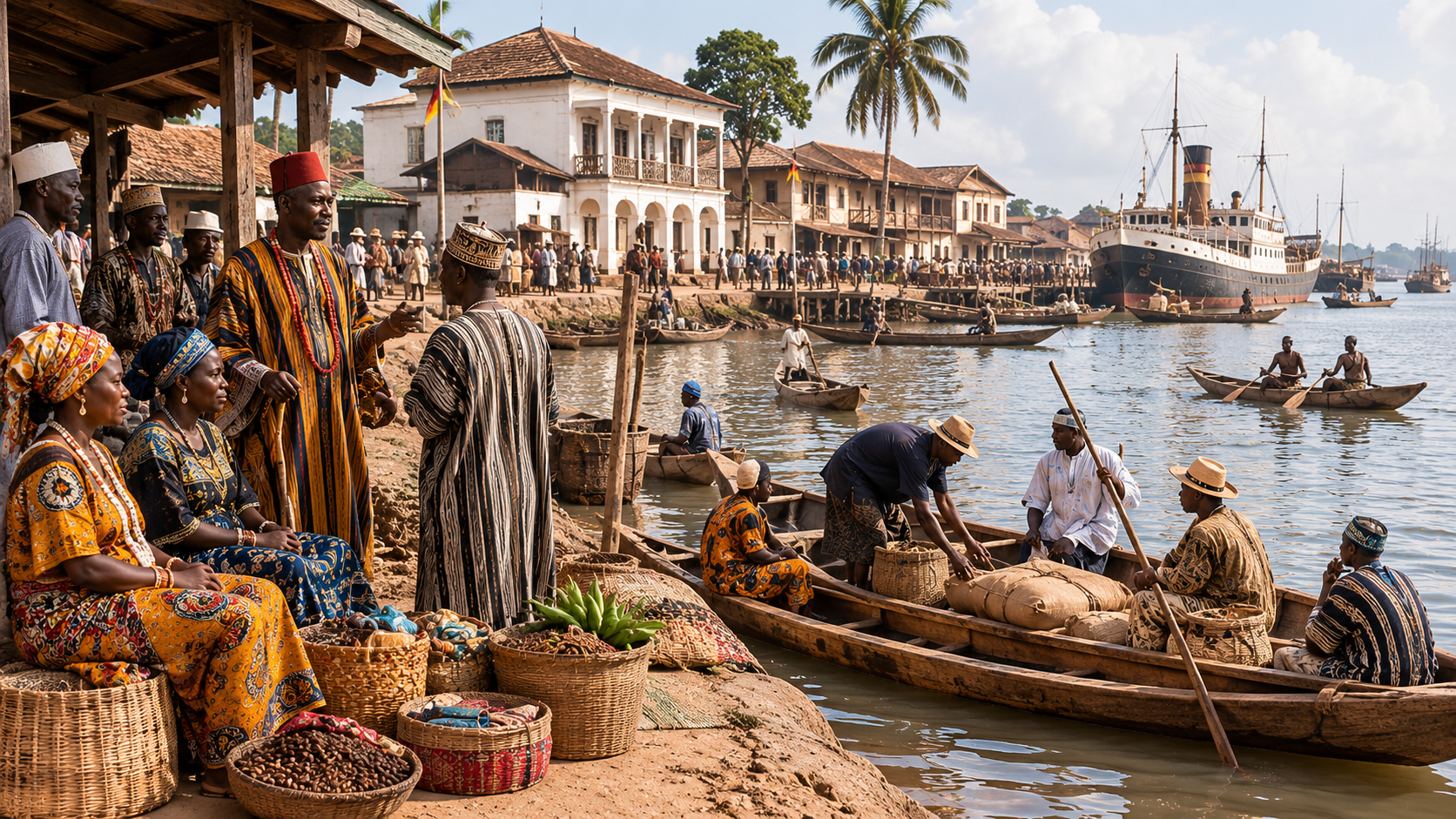
One of the most remarkable features of King Rudolf Duala Manga Bell's resistance was his determination to use peaceful and legal means.
He organised petitions.
He communicated with German authorities.
He reached out to political and media contacts in Germany.
He challenged expropriation through arguments based on agreements, justice and legal procedure.
At a time when colonial authorities possessed overwhelming military power, this strategy required enormous confidence.
Rudolf understood something fundamental:
If colonial government claimed to operate through law, then colonial government could also be challenged through law.
His efforts became increasingly effective.
The controversy reached Germany itself, where the question of Duala expropriation was discussed politically.
A petition connected to Manga Bell's resistance contributed to the German Reichstag withholding funds for the expropriation programme in March 1914 while the Duala complaints were examined.
For colonial officials determined to proceed with their plans, Rudolf was no longer simply a local ruler expressing dissatisfaction.
He had become politically inconvenient.
Adolf Ngoso Din: The Man Who Stood Beside Him
King Rudolf Duala Manga Bell's story should not be told without Adolf Ngoso Din.
Ngoso Din served as a close associate and secretary and played an important role in the campaign against expropriation.
Together they pursued peaceful political resistance.
They petitioned.
They communicated.
They attempted to bring attention to the injustice confronting the Duala people.
And ultimately, they shared the same fate.
Remembering Rudolf while forgetting Ngoso Din would leave the story incomplete.
Arrest, High Treason Charges and Trial
In 1914, the colonial administration accused King Rudolf Duala Manga Bell of high treason.
The accusation suggested that he had been involved in efforts to overthrow German colonial rule with the help of foreign powers.
Modern historical reassessment has fundamentally changed how these accusations are understood.
German government authorities now acknowledge that the charges against Rudolf Duala Manga Bell and Adolf Ngoso Din were fabricated to suppress their peaceful political resistance.
The criminal proceedings were deeply unjust.
Even according to the legal principles of the period, the process did not meet acceptable standards of justice.
The trial therefore represents far more than a tragic episode in one man's biography.
It is an example of what can happen when law is used not to restrain power, but to protect it.
The Execution of King Rudolf Duala Manga Bell
On 8 August 1914, King Rudolf Duala Manga Bell and Adolf Ngoso Din were sentenced to death and executed by the German colonial administration.
Rudolf had spent years studying German culture and institutions.
He had spoken the German language.
He had attempted negotiation.
He had petitioned.
He had appealed to law.
Yet the system he had tried to engage legally ultimately condemned him.
That is part of what makes his death so historically powerful.
He did not die because he had failed to understand the colonial system.
He understood it remarkably well.
He died because he challenged the way that power was being exercised.
Germany's Modern Recognition of the Injustice
The historical story did not end in 1914.
More than a century later, Germany has formally confronted aspects of what happened.
The German Federal Government has politically rehabilitated King Rudolf Duala Manga Bell and Adolf Ngoso Din.
The German Federal Foreign Office has acknowledged their innocence and described their executions as a grave miscarriage of justice.
This modern recognition matters.
It does not undo their deaths.
It cannot restore the years lost or erase the effects of colonial rule.
But it establishes something important in the historical record:
Their peaceful resistance was not the crime.
The injustice committed against them was.
Why King Rudolf Duala Manga Bell Still Matters
Why should someone born generations later care about Rudolf Manga Bell?
Because his story reaches beyond colonial history.
It raises questions that remain relevant today:
What happens when governments ignore agreements?
What does responsible leadership require?
How should communities defend their land?
What is the value of peaceful resistance?
Can law protect ordinary people when those in power control its institutions?
King Rudolf Duala Manga Bell's life forces us to think about leadership not as privilege, but as responsibility.
He could have protected himself by remaining silent.
Instead, he chose to defend the interests of his people.
That decision turned him from a traditional ruler into one of the defining historical personalities of Cameroon.
What His Leadership Can Teach Future Generations
Several lessons emerge from his life.
Education Can Become Power:
Rudolf used knowledge acquired through German education to challenge German colonial administration.
Education was not simply decoration.
It became a political instrument.
Leadership Requires Courage:
Leadership becomes meaningful when there is something to lose.
Rudolf had status.
He had influence.
He had a family.
He still chose resistance.
Peaceful Resistance Is Not Weak Resistance:
Letters, petitions and legal arguments may appear less dramatic than armed confrontation.
But Rudolf's campaign became influential enough to worry colonial authorities and reach political debate in Germany.
Land Is More Than Property
For communities, land can represent history, livelihood, identity and belonging.
Rudolf understood this deeply.
Justice Must Apply Even When Power Is Challenged
Perhaps the strongest lesson is that a legal system reveals its character most clearly when it is asked to judge those who challenge authority.
King Rudolf Duala Manga Bell and Modern Douala
Modern Douala would be almost unrecognisable to someone living there in 1914.
Today it is Cameroon's largest commercial centre, home to major businesses, industries, markets, banks, transport networks and the country's principal port.
The Wouri River remains central to the city's identity.
Neighbourhoods that once represented political and traditional territories now form part of a vast and expanding metropolis.
Yet beneath modern Douala lies an older story.
The story of land.
The story of trade.
The story of colonial transformation.
And the story of people like King Rudolf Duala Manga Bell who understood that the decisions being taken in their lifetime would affect generations that had not yet been born.
My Personal Experience
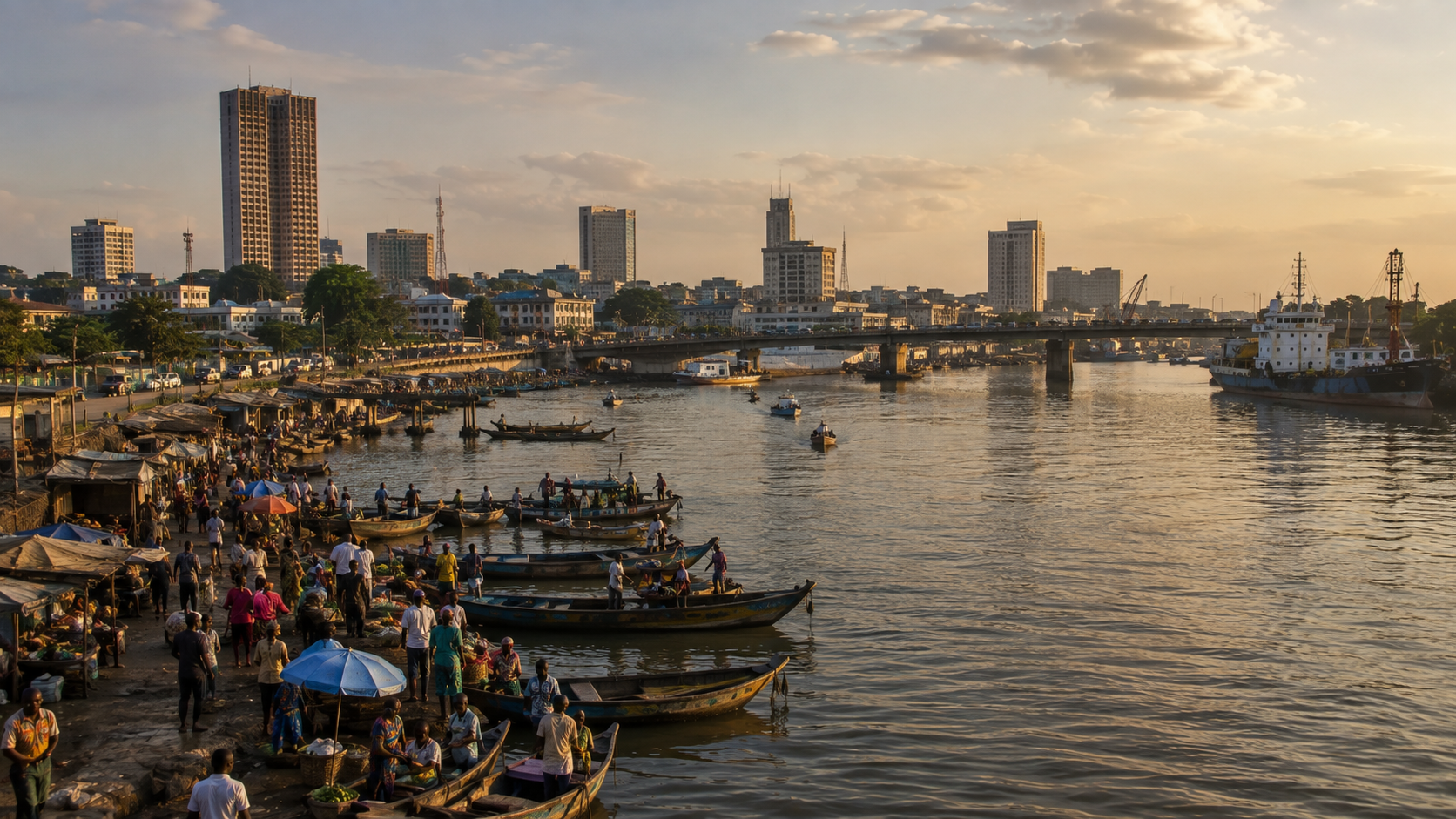
I have travelled to Douala many times over the years, often from Buea.
Every visit reminds me just how different Douala is from much of Cameroon.
It is intense.
The traffic can be exhausting.
The markets are alive.
Businesses seem to operate everywhere.
People arrive from different regions looking for work, trade, education and opportunity.
Modern Douala feels like a city constantly moving forward.
Yet when I think about King Rudolf Duala Manga Bell, I also find myself trying to imagine the city before all of this existed.
What did the banks of the Wouri look like?
What did families think when they learned that the land around them could be taken?
What did Rudolf feel when petitions and legal arguments that he believed should protect his people were repeatedly resisted?
Looking at today's Douala gives the story another meaning for me.
He was not merely defending pieces of soil.
He was defending belonging.
He was defending the ability of a community to have a voice in what happened to its home.
That is why his story deserves to remain alive.
Who Was the Real King Rudolf Duala Manga Bell?
It is tempting to simplify historical figures into slogans.
Rudolf Manga Bell deserves better.
He was not merely "anti-German."
He had been educated within German institutions.
He initially maintained relations with the colonial administration.
His resistance developed from a specific political and legal conflict.
Nor should his story be reduced only to martyrdom.
Before his death, he was already demonstrating a sophisticated form of political resistance based on law, diplomacy, international communication and organised petitioning.
Understanding the full man makes his story more impressive, not less.
Explore More on All About Cameroon
For deeper context, continue with:
- Important Personalities in Cameroon
- Douala City Guide
- Cameroon Cities and Regions Guide
- Cameroon Culture and Society
- Cameroon Quick Facts
- Cameroon Constitution and Government Structure
External References and Further Reading
For readers who want to explore the historical record in greater depth:
German Federal Archives — Rudolf Duala Manga Bell
The Bundesarchiv provides archival documents and historical background on Rudolf Manga Bell, including his education, resistance to expropriation, petitions, prosecution and execution.
German Federal Foreign Office — Rudolf Duala Manga Bell and Adolf Ngoso Din
The German Federal Foreign Office provides an important modern assessment of their case, including Germany's political rehabilitation of both men and recognition that they were unjustly executed.
Ralph A. Austen — Duala versus Germans in Cameroon
This scholarly historical study examines the wider economic and political dimensions of the conflict between the Duala people and German colonial authorities.
Discover More Stories From Cameroon's Past
Cameroon's history is filled with rulers, resistance leaders, writers, innovators, artists, athletes and ordinary people who did extraordinary things.
Subscribe to the All About Cameroon Newsletter to receive:
- New historical biographies
- Cameroon travel and cultural guides
- Stories from towns, villages and communities
- Diaspora perspectives
- Special features and community projects
→ Subscribe to Our Newsletter
Share the Story of King Rudolf Duala Manga Bell
History survives when people continue telling it.
If this story taught you something, share it with others.
Facebook — All About Cameroon
YouTube — All About Cameroon
TikTok — All About Cameroon
Instagram — All About Cameroon
You can also share this article directly with students, teachers, friends and members of the Cameroonian diaspora.
Final Perspective
Some leaders are remembered for the wars they won.
Others are remembered for the offices they occupied.
King Rudolf Duala Manga Bell is remembered for something different.
He stood before a powerful colonial administration and insisted that agreements, rights and justice mattered.
He chose petitions over violence.
Law over intimidation.
Argument over surrender.
And when those methods placed him in danger, he did not simply walk away from the people he represented.
His execution on 8 August 1914 was intended to end his resistance.
Instead, it helped immortalise it.
Today, his story belongs not only to the Duala people or to Douala.
It belongs to Cameroon.
It belongs to the wider history of African resistance to colonial injustice.
And perhaps most importantly, it belongs to future generations who need examples of what principled leadership can demand.
King Rudolf Duala Manga Bell may have been executed.
But the principle he defended survived him:
A people should have a voice in the future of their own land.