Chief Asonganyi: The Bangwa Ruler Who Resisted German Colonial Rule
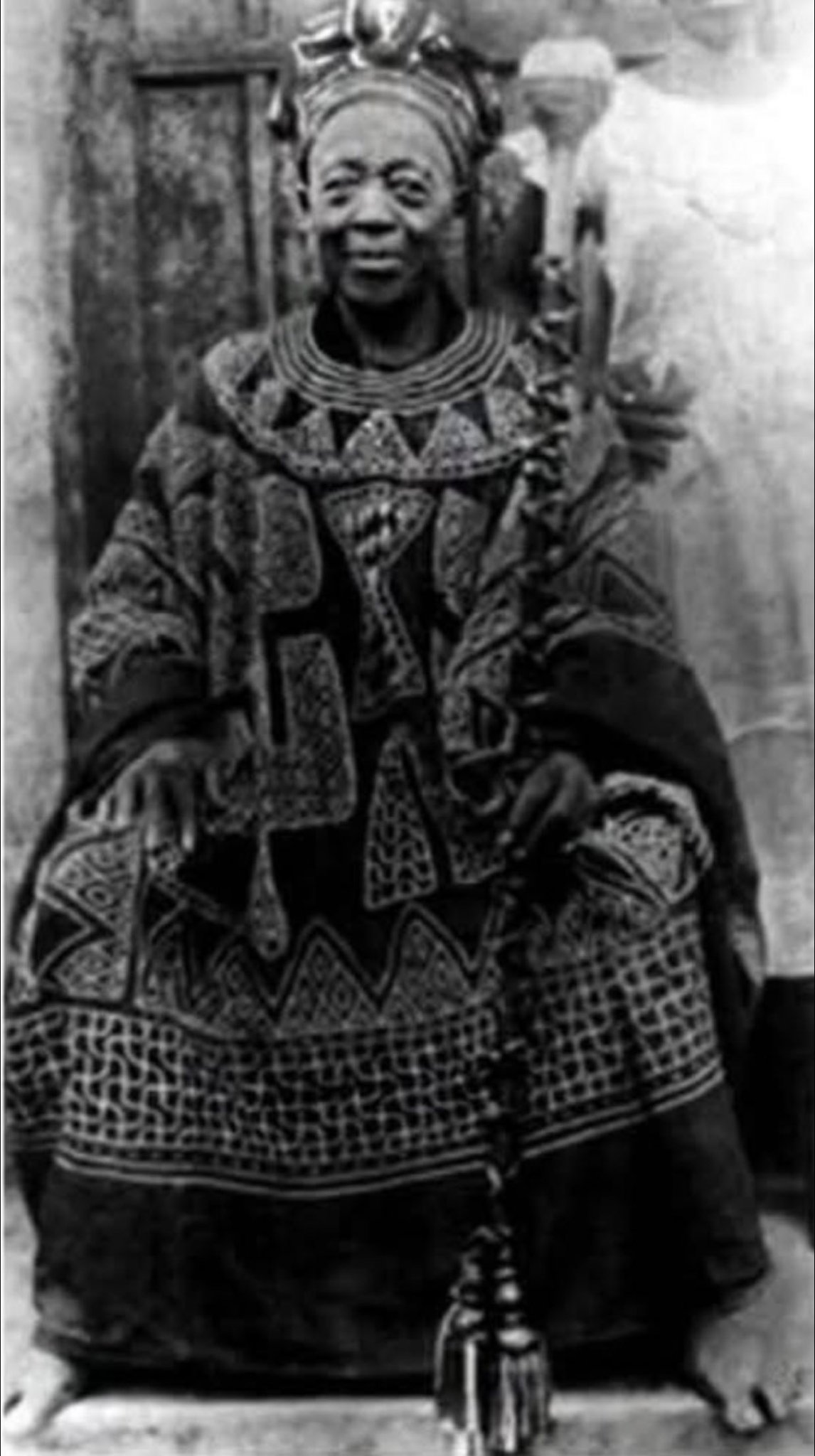
Chief Asonganyi, more precisely remembered as Fon Fontem Asonganyi, stands among the most remarkable traditional rulers in the history of Cameroon’s South West highlands. Ruling from Azi in Lebang, within the wider Bangwa area of present-day Lebialem Division, he became known for resisting German colonial expansion, enduring exile and eventually returning to his homeland.
His story combines diplomacy, conflict, survival and cultural memory.
It is also a reminder that Cameroon’s resistance to colonial rule did not occur only in major coastal towns. Far inside the mountainous interior, traditional rulers were confronting the same fundamental question: who had the right to control their people, land and future?
Who This Article Is For?
This article is especially useful for Cameroonians interested in colonial history, students researching traditional leadership, members of the diaspora discovering Lebialem, and readers exploring the Important Personalities in Cameroon collection.
It also provides useful context for understanding Bangwa cultural heritage and current debates about African objects removed during the colonial era.
It also provides useful context for understanding Bangwa cultural heritage and current debates about African objects removed during the colonial era.
Chief Asonganyi was born around 1870 and became ruler of Lebang, one of the kingdoms associated with the Bangwa highlands.
The Bangwa were not a single centralised kingdom governed by one monarch. Rather, the term came to encompass several related communities and kingdoms in the western Cameroon highlands.
Asonganyi nevertheless emerged as one of the region’s most influential rulers.
His palace at Azi functioned as an important centre of authority, diplomacy, trade and ritual life.
By the late nineteenth century, however, this established political world was coming into direct contact with German colonial ambitions in Kamerun.
Chief Asonganyi Meets Gustav Conrau
The major turning point came in late 1898 when German trader, explorer and colonial agent Gustav Conrau arrived in the Bangwa area.
Their relationship did not begin with warfare.
Chief Asonganyi initially received Conrau diplomatically and showed interest in trade. Historical accounts indicate that an arrangement was reached under which Bangwa men would accompany Conrau to work near the coast.
The exact number differs between accounts, but the larger issue is clear: the relationship was based on expectations and obligations on both sides.
When Conrau returned without many of the original workers and requested additional men, the relationship collapsed.
Asonganyi demanded explanations and compensation.
Conrau was detained.
The Conrau Incident and the Breakdown of Relations
The precise circumstances of Gustav Conrau’s death remain an area where historical accounts require care.
Evidence suggests that, while being held after the labour dispute, Conrau attempted to escape. Accounts recorded later state that he died from a self-inflicted gunshot during the confrontation.
What is not disputed is the consequence.
His death transformed a deteriorating commercial relationship into a colonial conflict.
German authorities responded with punitive military action against Asonganyi and his people.
Chief Asonganyi and Resistance in the Highlands
German military expeditions targeted Asonganyi’s political authority.
Palace structures were destroyed, settlements suffered and colonial forces attempted to bring the territory under firmer control.
Yet Chief Asonganyi remained difficult to capture.
Local history remembers him as a ruler who used the forests, mountains and difficult terrain of Lebialem to resist German forces for years.
The historical memory of this resistance became deeply embedded in Bangwa identity.
Accounts preserved in the region describe Asonganyi not simply as a traditional monarch, but as a defender of political independence.
His struggle lasted long enough to turn him into one of the dominant personalities of early colonial history in the Bangwa area.
Capture and Exile to Garoua
In 1911, German authorities finally captured Chief Asonganyi.
Local historical accounts maintain that betrayal played a role in his capture.
He was removed far from his kingdom and exiled to Garoua, in northern Cameroon.
Exile was an effective colonial strategy because it separated a ruler from the landscape, institutions and population that gave his authority meaning.
A replacement administration operated in Lebang during his absence.
But Asonganyi’s story was not finished.
Germany’s defeat during the First World War brought German rule in Kamerun to an end. Under the new colonial order, Asonganyi was eventually permitted to return.
His homecoming carried enormous symbolic importance.
The ruler who had been removed from his kingdom returned to his people and resumed his position.
He continued to rule until his death in 1951.
Chief Asonganyi and the Bangwa Queen
Asonganyi’s period also overlaps with another important story: the removal of culturally significant Bangwa sculptures to Europe.
The most famous is the wooden ancestor sculpture popularly called the Bangwa Queen.
Gustav Conrau acquired a substantial collection of Bangwa objects during his time in the region. The precise circumstances under which individual works left their communities remain disputed; researchers describe some objects as gifts or exchanges, while restitution advocates argue that colonial power and coercion cannot be ignored.
Today, the Bangwa Queen has become an internationally recognised case in debates about cultural heritage and restitution.
For descendants of the communities from which such objects originated, these are not simply beautiful museum pieces.
They are part of a living cultural inheritance.
My Personal Experience and Connection
For me, Chief Asonganyi’s history carries particular meaning because my own roots are in Lebialem.
His name belongs to a landscape that is more than a point on a map: hills, forests, villages, traditional institutions and generations of family history.
Growing older has made me appreciate how easily local history can disappear when it remains only in oral memory.
That is one reason I believe stories such as Asonganyi’s deserve careful documentation.
We should celebrate courage without turning history into mythology. We should also acknowledge uncertainty where the written and oral records do not fully agree.
Doing so does not weaken his legacy.
It makes it more credible.
Why Chief Asonganyi Still Matters
Chief Asonganyi represents a generation of African leaders forced to navigate a rapidly changing political world.
He first attempted engagement.
When relations broke down, he resisted.
He lost his palace.
He lost his freedom.
He was removed hundreds of kilometres from his homeland.
Yet he eventually returned.
His life therefore speaks to resilience, sovereignty, leadership and belonging.
It also reminds future generations that colonial expansion was not an uncontested process. Communities responded, negotiated, resisted and remembered.
External References and Further Reading
For deeper research, readers may consult:
AfricaBib — “Gustav Conrau and Fontem Asonganyi, 1898–1903”
A useful scholarly reference concerning the early relationship between Asonganyi and Conrau.
Cambridge University Press — “The Bangwa Queen: Artifact or Heritage?”
An academic examination of the sculpture, its spiritual significance and the modern debate over cultural heritage and restitution.
Provenance Research on Collections from Colonial Contexts
Research examining Bangwa collections removed during the German colonial period.
Explore More on All About Cameroon
Continue with:
- Important Personalities in Cameroon
- Cameroon Culture and Society
- Cameroon Cities and Regions Guide
- Cameroon Explained: What Everyone Gets Wrong
Join Our NewsLetter
Discover More Cameroonian Personalities
Subscribe to the All About Cameroon Newsletter for new biographies, cultural stories, travel guides and historical features.
Follow Us on Social Media
Final Perspective on Chief Asonganyi
Chief Asonganyi was not simply a ruler remembered because he fought Europeans.
His importance lies in the much larger story his life represents.
He belonged to a political world that existed before colonial control reached the Bangwa highlands. He witnessed that world challenged by an expanding foreign power. He attempted diplomacy, endured conflict, suffered exile and eventually returned home.
His palace could be destroyed.
His authority could be interrupted.
His body could be removed from Lebang.
But his place in the memory of his people proved much harder to erase.
More than a century after his confrontation with German colonial expansion, Chief Asonganyi remains one of the defining historical personalities of the Bangwa highlands.
His story survives because it represents something larger than one man:
the determination of a people to preserve dignity, identity and the right to belong to their own land.