Cameroon Food and Cultural Identity Explained – Tradition, Memory & Belonging
Cameroon food and cultural identity explained properly requires more than listing popular dishes. Cameroon food and cultural identity explained means understanding how meals represent history, belonging, regional pride, and emotional memory.
Food in Cameroon is not simply nutrition. It reflects geography, community structure, migration patterns, and social connection. What people cook, how they cook, and when they eat often carry symbolic meaning.
This article explains how food functions within cultural identity and daily life.
Understanding Cameroon Food and Cultural Identity Explained
When discussing Cameroon food and cultural identity explained, we must see food as a social system.
Meals influence:
- Family bonding
- Ceremonial gatherings
- Hospitality traditions
- Regional identity
- Diaspora connection
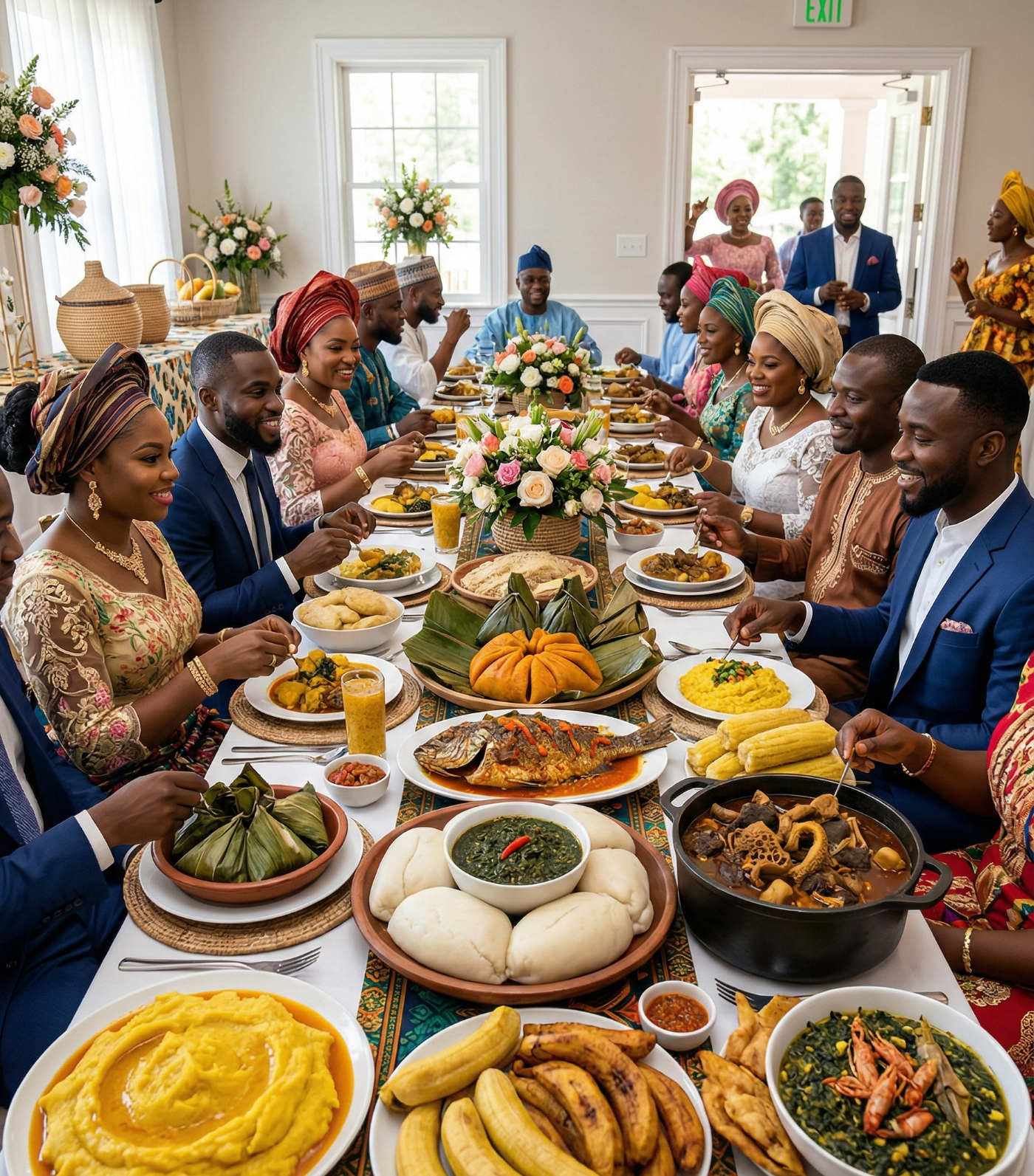
Food often marks important life events such as weddings, funerals, religious celebrations, and community festivals.
Understanding food traditions offers insight into broader social patterns.
Regional Diversity in Cuisine
Cameroon food and cultural identity explained must include regional variation.
Different regions produce different staple ingredients based on climate and geography.
For example:
- Coastal areas may rely more on fish and seafood.
- Highland regions may emphasise tubers and vegetables.
- Savannah regions may reflect grain-based staples.
Local agriculture shapes cuisine.
Regional dishes often become markers of identity. People frequently associate themselves with the foods of their home region.
For geographic context:
→ Cameroon Cultural Diversity Explained
→ Cameroon Map Guide
Food and Community Gathering
Food strengthens social connection.
In many communities, meals are shared communally rather than eaten individually.
Shared meals may involve:
- Extended family
- Neighbours
- Friends
- Community members
Hospitality often includes offering food, even to unexpected visitors.
Refusing food without explanation may sometimes be perceived as distancing, not merely dietary preference.
Food reinforces belonging.
Ceremonial and Ritual Food
Certain dishes may be prepared specifically for:
- Marriage ceremonies
- Religious celebrations
- Funeral gatherings
- Traditional festivals
Preparation methods and presentation may carry symbolic meaning.
Cameroon food and cultural identity explained must recognise that ceremonial food may serve social or spiritual significance beyond taste.
For global cultural heritage context:
Food and Family Structure
Food preparation often involves multiple family members.
Cooking may serve as:
- Skill transmission from elders to youth
- Cultural education
- Emotional bonding
Recipes are frequently passed through generations.
Food therefore becomes a living archive of family history.
Diaspora and Food Memory
Cameroon food and cultural identity explained becomes especially visible in diaspora communities.
Many Cameroonians abroad maintain strong emotional attachment to traditional dishes.
Food abroad may represent:
- Home memory
- Identity preservation
- Cultural pride
- Resistance to assimilation
Access to familiar ingredients often shapes diaspora gathering patterns.
Food becomes symbolic continuity.
For diaspora context:
→ Diaspora & Return Guide
Urbanisation and Modern Influence
Urbanisation has influenced cuisine.
City life introduces:
- Fast food culture
- International cuisine exposure
- Modified cooking methods
- Hybrid dishes
However, traditional foods remain important markers of identity.
Modernisation modifies but rarely erases food heritage.
Economic Factors and Food Choices
Economic realities influence diet.
Access to ingredients may depend on:
- Location
- Income
- Season
- Infrastructure
Urban markets often provide broader ingredient variety, while rural communities may rely more on locally grown staples.
Food reflects both cultural preference and economic possibility.
For daily life context:
→ Daily Life in Cameroon
Common Misunderstandings About Food Culture
Some oversimplifications include:
- Treating traditional dishes as static
- Assuming all regions share identical cuisine
- Viewing food only as economic necessity
- Ignoring emotional significance
Cameroon food and cultural identity explained requires seeing food as both practical and symbolic.
Why Cameroon Food and Cultural Identity Explained Matters
Understanding Cameroon food and cultural identity explained improves:
- Cultural literacy
- Diaspora reconnection
- Social integration
- Community respect
- Business adaptation (especially hospitality sector)
Food often acts as the first point of cultural contact for visitors.
Understanding its deeper meaning prevents superficial interpretation.
Part of the Cameroon Culture and Society Guide
This article on Cameroon food and cultural identity explained is part of the broader Cameroon Culture and Society hub.
For a complete understanding of traditions, religion, and family systems:
External Reference
For global recognition of culinary heritage:
Check Out UNESCO CULTURAL HERITAGE
Final Perspective
Cameroon food and cultural identity explained reveals how meals carry memory, belonging, and regional pride.
Cuisine reflects geography, family structure, economic reality, and diaspora continuity.
Food in Cameroon is not merely consumption — it is cultural expression.
Understanding it provides deeper insight into how society functions beyond surface observation.