Cameroon Religion and Daily Life Explained – Belief, Practice & Social Influence
Cameroon religion and daily life explained properly requires understanding that religion is not isolated from society. In many communities, Cameroon religion and daily life explained means recognising how belief systems influence behaviour, ceremonies, family expectations, leadership structures, and community interaction.
Religion in Cameroon is not merely private spirituality. It often shapes public life, moral instruction, and social organisation.
This article explains how religion interacts with everyday routines and social structures across different regions.
Understanding Cameroon Religion and Daily Life Explained
When discussing Cameroon religion and daily life explained, it is important to see religion as embedded in social systems rather than separate from them.
Religion influences:
- Marriage ceremonies
- Funeral practices
- Naming rituals
- Community gatherings
- Social discipline
- Moral teaching
Faith institutions often serve as both spiritual centres and community hubs.
In many regions, religion provides social cohesion as well as belief structure.
Major Religious Traditions
Cameroon religion and daily life explained must acknowledge the presence of:
- Christianity
- Islam
- Traditional belief systems
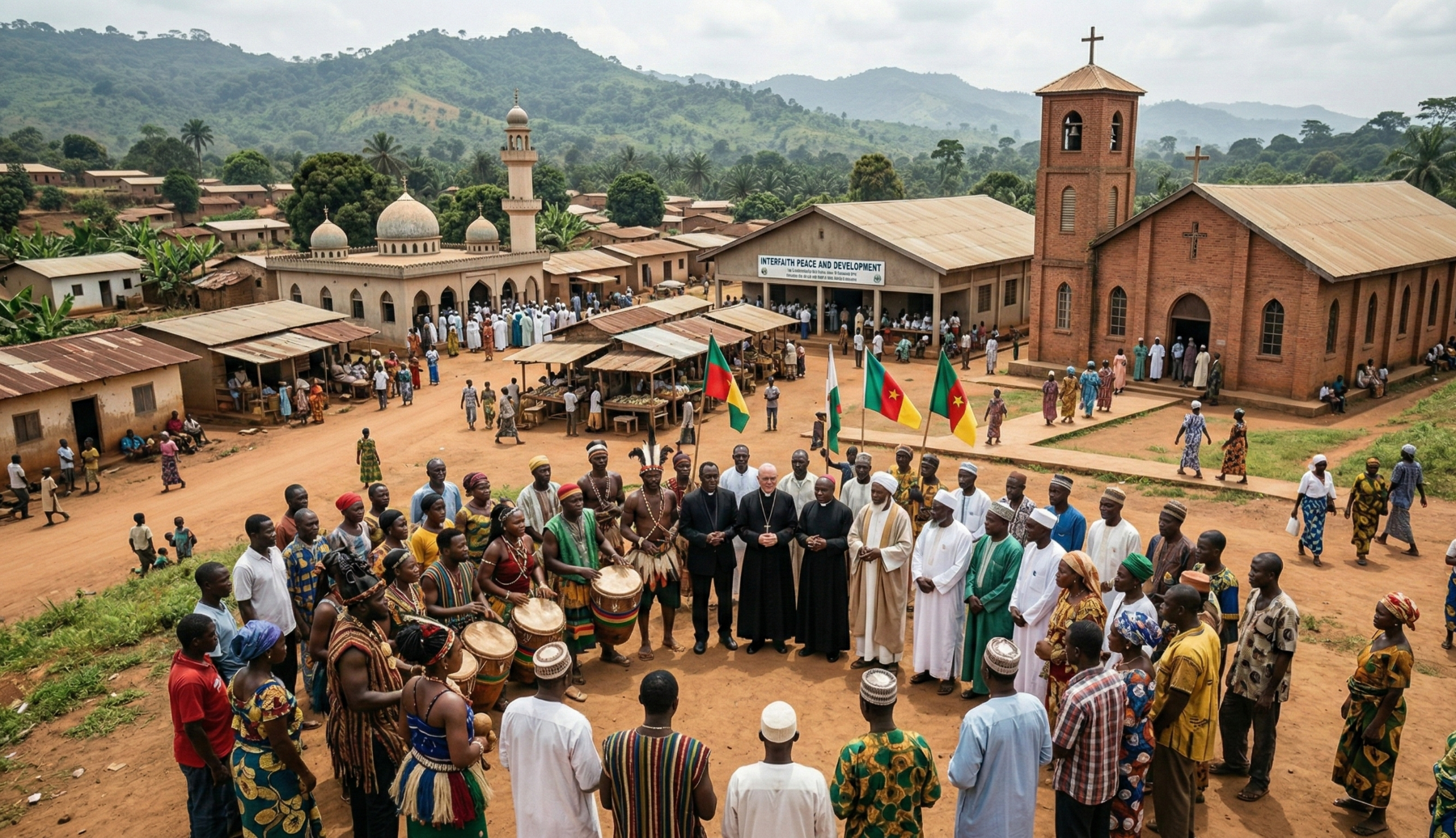
Christianity is widely practiced across many regions, with various denominations. Islam is prominent in several northern communities. Traditional spiritual systems continue to influence cultural practices, even where formal religion is dominant.
These traditions often coexist within shared communities.
Christianity and Social Structure
Christian institutions play a visible role in daily life.
Churches may influence:
- Education
- Marriage guidance
- Youth programs
- Charity initiatives
- Community leadership
Sunday worship often functions as both spiritual and social gathering.
Christian influence shapes:
- Moral language
- Public expectations
- Social respectability norms
Religious affiliation may influence community belonging.
Islam and Community Organization
In regions where Islam is prominent, daily life may reflect:
- Structured prayer routines
- Religious education systems
- Modest dress expectations
- Community authority frameworks
Religious leaders may hold significant influence in community affairs.
Religious practice structures daily rhythm and communal identity.
Traditional Belief Systems
Cameroon religion and daily life explained cannot ignore traditional belief systems that predate colonial influence.
Traditional spirituality may involve:
- Ancestor reverence
- Symbolic rituals
- Cultural ceremonies
- Community mediation
Even where Christianity or Islam dominates, traditional practices may continue to influence:
- Marriage rites
- Funeral customs
- Cultural festivals
Tradition and modern religion often coexist.
For broader global reference on intangible heritage:
UNESCO Intangible Cultural Heritage
Religion and Family Expectations
Religion often influences:
- Gender roles
- Marriage preparation
- Child upbringing
- Social discipline
Parents may prioritise religious upbringing as part of moral education.
Religious belief can shape expectations regarding:
- Respect for elders
- Community participation
- Behaviour standards
Understanding this helps returnees and foreigners avoid cultural misinterpretation and ensures a peace co-existence with local inhabitants, both in the villages, towns and cities in the country.
Religion in Urban vs Rural Contexts
Urban areas may display:
- Greater denominational diversity
- Mixed religious communities
- More flexible religious expression
Rural communities may display:
- Stronger religious homogeneity
- Traditional authority overlap
- More visible communal religious participation
Both reflect different expressions of Cameroon religion and daily life explained.
Religion and Public Life in Cameroon
Religion may influence:
- Public holidays
- Political rhetoric
- Community fundraising
- Social celebrations
Religious institutions sometimes serve as centres for:
- Information dissemination
- Community mobilisation
- Crisis response
Religion in Cameroon is extremely important and may therefore intersect with civic life.
For broader societal context:
→ Cameroon Culture and Society
Common Misunderstandings
Cameroon religion and daily life explained is often oversimplified by outsiders.
Common misconceptions include:
- Assuming religion is purely private
- Assuming one religion dominates uniformly nationwide
- Ignoring coexistence of belief systems
- Misinterpreting traditional practices as superstition
Religious expression varies by region and community.
Why Cameroon Religion and Daily Life Explained Matters
Understanding Cameroon religion and daily life explained improves:
- Social interaction
- Community integration
- Business relationship building
- Return planning
- Cultural literacy
Religious context influences behaviour patterns and moral expectations.
It also shapes how conflict is interpreted and resolved.
For structural reference:
→ Cameroon Cultural Diversity Explained
→ Daily Life in Cameroon
→ Media & Safety Guide
You can also read the following articles:
- Cameroon’s Cultural Diversity Explained Simply
- Marriage, Family, and Social Expectations in Cameroon
Part of the Cameroon Culture and Society Guide
This article on Cameroon religion and daily life explained is part of the broader Cameroon Culture and Society hub.
For a complete overview of traditions, family structure, and identity:
→ Cameroon Culture and Society
Final Perspective
Cameroon religion and daily life explained reveals how belief systems shape social organisation rather than exist separately from it.
Religion influences ceremonies, family structure, communication style, and moral expectations. It operates within regional diversity and interacts with tradition and modernity.
Understanding this relationship reduces misunderstanding and improves cultural awareness.